Blog
Detergent Enzymes 101: Compatibility, Storage, and Performance

Detergent enzymes help you remove stains that surfactants and builders cannot fully solve on their own. They improve cleaning in cold washes, short cycles, and low-dosage programs because they target specific soils and break them into water-removable fragments. For brands and private label projects, enzymes also change the “rules” of formulation. They affect what you can combine, how you process the batch, what packaging you need, and which stability tests are non-negotiable. In this guide, you’ll learn enzyme roles, the most common compatibility failures, and the storage and testing approach that keeps performance consistent over shelf life. You can place internal links on the bold phrases to direct readers to the most relevant pages on your site.
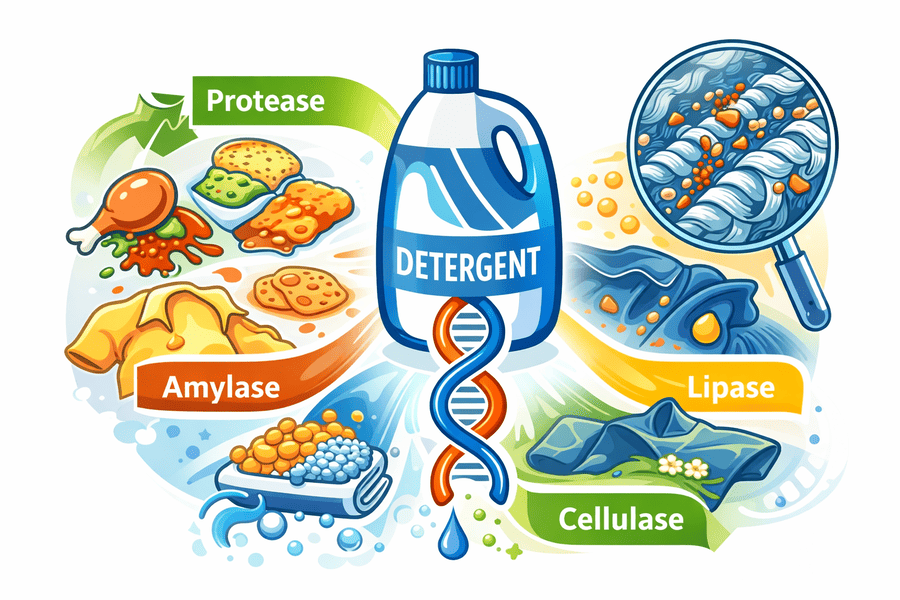
Laundry enzyme performance starts with matching the enzyme family to the stain story. Protease supports removal of protein stains like blood, dairy, and grass. Amylase supports starch stains from rice, pasta, and sauces. Lipase helps with oily soils and sebum-heavy areas such as collars and cuffs. Cellulase is often used for fabric care benefits, such as reducing fuzz and improving color appearance over repeated washes. Specialty enzymes can target specific food gums, but they should be used only when there is a clear market need. If you want to guide readers into your solution structure, link these concepts to laundry detergent formulations and high-performance detergent formulas so they understand enzymes as part of a complete system.
Most enzyme problems are not caused by “bad enzymes.” They are caused by predictable incompatibilities. Enzymes are proteins, so they lose activity when exposed to moisture, oxidation stress, extreme alkalinity, heat, or harsh processing. A product may look stable visually while its cleaning power quietly declines. This is why an enzyme detergent must be designed around survival in storage first, then activation in the wash. For readers who want to go deeper, connect this section to formulation troubleshooting guides and quality control tests.
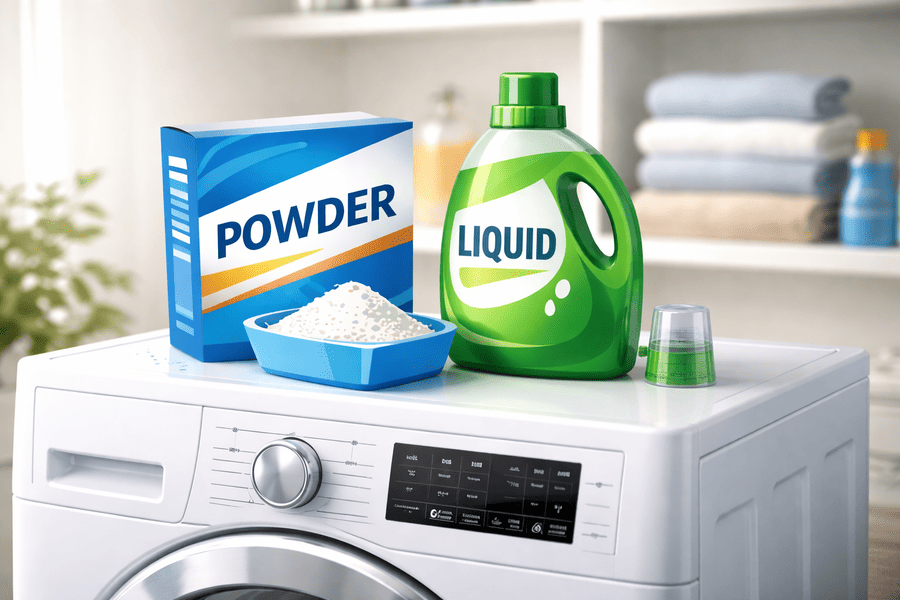
Format choice also matters. Powders often protect enzymes well if humidity is controlled, because you can use granulated enzyme forms and keep water activity low. Liquids can deliver great convenience, but they require careful processing temperatures and a stable matrix that keeps enzymes active over time. Pods add a film interface and strict moisture control, so compatibility and dissolution testing become critical. You can keep users moving across your site by linking format-specific phrases such as powder detergent formulas, liquid detergent formulas, and detergent pod concentrates.
Stability is where enzyme detergents succeed or fail. Many teams test only “day-one” wash performance, then launch. Enzyme detergents need activity retention checks over time, plus real-world wash tests that reflect cold cycles, short programs, and varying water hardness. Packaging validation is also part of formulation work, especially for powders and pods where moisture control decides shelf life. This is a good moment to link readers to stability testing protocols and packaging selection for detergents.
Enzyme types and what they target (link-ready)
-
protease enzyme for laundry detergents (protein stains; grass, blood, dairy)
-
amylase enzyme in detergent (starch stains; rice, pasta, sauces)
-
lipase enzyme for oily stains (sebum, grease, collar and cuff soils)
-
cellulase enzyme for fabric care (color care, anti-pilling, soil release)
Suggested internal hubs to link:
-
raw material library
-
laundry detergent formulation packs
Compatibility checklist (the real reasons enzymes fail)
-
moisture control for powder detergents (humidity pickup reduces activity and increases caking risk)
-
oxygen bleach and enzyme compatibility (uncontrolled oxidation can reduce enzyme activity in storage)
-
builder system design for hard water (excess alkalinity can reduce enzyme efficiency and stability)
-
low-temperature enzyme performance (enzymes must match cold wash targets, not only standard tests)
-
mixing temperature and shear control (hot, high-shear processing can reduce enzyme activity)
Suggested internal links:
-
oxygen bleach detergent formulas
-
enzyme-compatible builder systems
-
hard water detergent formulation
Storage and packaging rules that protect enzyme activity
-
moisture barrier packaging for detergents (especially for powders and pods)
-
warehouse humidity control for detergent products (stability depends on distribution reality)
-
temperature stability for liquid detergents (avoid prolonged heat exposure)
-
inventory rotation for enzyme detergents (FIFO reduces long-storage losses)
Suggested internal links:
-
technical data sheets (TDS)
-
private label detergent documentation
-
packaging validation
Minimum testing plan (simple, defensible, repeatable)
-
enzyme activity retention testing (baseline + accelerated + real-time checks)
-
detergent wash performance benchmarking (cold cycle + short cycle + hard water)
-
powder caking and flow testing (humidity stress and handling)
-
liquid viscosity drift testing (seasonal and raw-material variability)
-
pod dissolution testing in cold water (film + concentrate compatibility)
Suggested internal links:
-
detergent lab testing
-
performance benchmarking
-
pod stability and dissolution testing
Closing takeaway
If you want enzymes to deliver consistent results, build the formula around enzyme survival first, then optimize wash activation. The best results come when enzymes, builders, bleach strategy, packaging, and storage conditions are treated as one system. To help readers take action on your site, place internal links on the bold phrases above and route them toward laundry detergent formulations, stability testing protocols, and formulation packs that match their chosen format and target market.