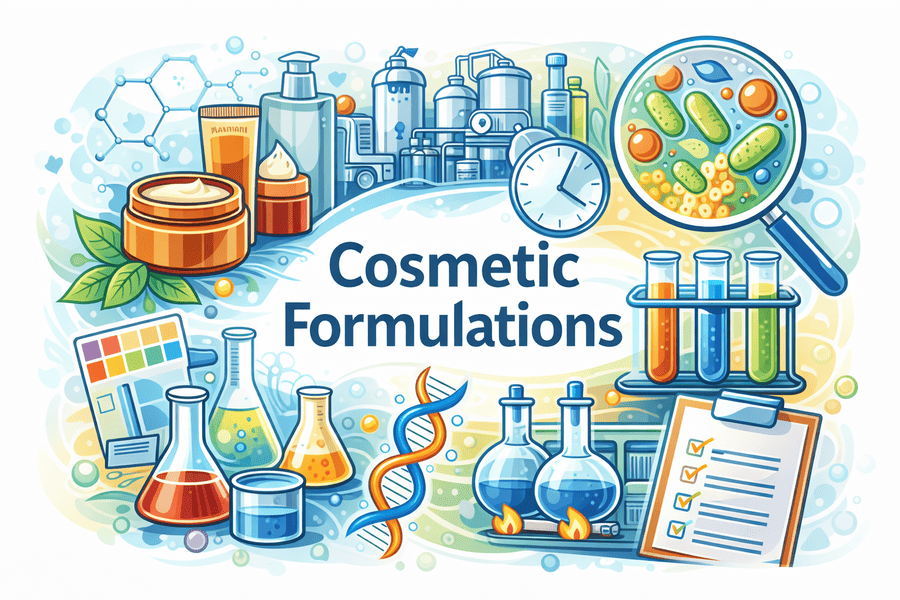
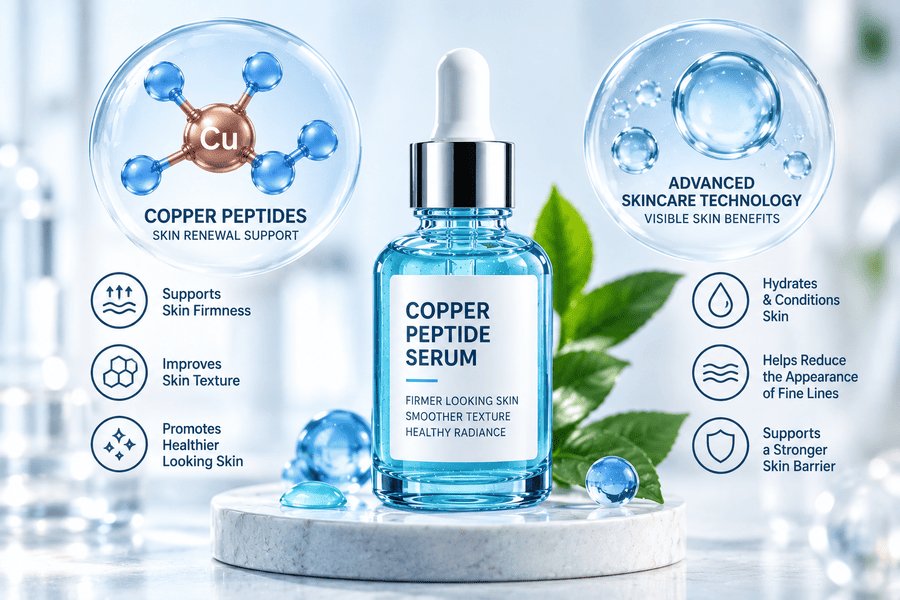
Cosmetic formulations sit at the intersection of science, safety, and user experience. Every successful product—whether a cleanser, serum, lotion, or hair treatment—starts with a well-structured formula that balances performance, stability, and regulatory compliance. This guide explains how cosmetic formulations are built in practice, why certain ingredients work together, and how formulators avoid common failures during development and scale-up. Throughout the article, you’ll find bold, link-ready phrases you can connect to relevant pages on your site.
At its core, a cosmetic formulation is a system. It is not a random list of ingredients, but a deliberately designed structure where each component has a defined role. Water-based systems rely on emulsifiers and stabilizers to keep oil and water phases together. Anhydrous systems focus on solubility, texture, and oxidative stability. In both cases, performance depends on how well the system holds up over time and under real-use conditions. Readers new to the topic often benefit from exploring cosmetic formulation basics and ingredient functionality in cosmetics before diving into advanced optimization.
Ingredient selection is the most visible part of formulation work, but it is also where many mistakes begin. Active ingredients must be chosen not only for their marketing value, but for their proven performance within the intended pH, solvent system, and dosage range. Botanical extracts, for example, can add perceived value, but they also introduce variability and potential stability challenges. Surfactants, emollients, humectants, and polymers must be compatible with one another and with the final packaging. Linking this discussion to raw material libraries and functional ingredient categories helps readers understand why substitutions often change more than just the label.
Emulsions are among the most common cosmetic formats, yet they are also one of the most failure-prone. A stable emulsion requires the right emulsifier system, correct phase ratios, and controlled processing conditions. Temperature, shear, and mixing order all influence droplet size and long-term stability. An emulsion that looks perfect at the bench can separate after weeks of storage if these parameters are not optimized. This is why experienced formulators treat emulsion stability testing as a core development step rather than a final check.
Preservation is another critical pillar of cosmetic formulations. Any product that contains water is at risk of microbial contamination, regardless of how “clean” or “natural” the ingredients may appear. A preservative system must be broad-spectrum, compatible with the formula, and effective across the product’s entire shelf life. Preservation cannot be evaluated by ingredient lists alone; it must be verified through microbiological testing. Readers looking for deeper technical detail can be guided to cosmetic preservative systems and challenge testing protocols, which explain how safety is demonstrated in practice.
pH control plays a surprisingly large role in both safety and performance. Many actives are only stable or effective within narrow pH ranges, and preservatives often rely on specific pH conditions to work properly. Skin compatibility is also closely tied to pH, particularly for leave-on products. A formulation that drifts in pH over time can lose efficacy or cause irritation. This is why pH adjustment and buffering are treated as integral formulation steps rather than last-minute corrections. Linking to pH optimization in cosmetics can help readers connect theory to formulation decisions.
Stability testing extends far beyond checking whether a product separates. Cosmetic formulations must be evaluated under multiple stress conditions, including elevated temperature, freeze–thaw cycles, light exposure, and long-term storage. These tests reveal weaknesses in emulsifier systems, fragrance compatibility, and packaging interactions. Importantly, stability testing is not only about avoiding failure; it also supports claims related to shelf life and quality consistency. A useful internal reference here is cosmetic stability testing methods, which outline how different stress tests are selected.
Scale-up is where many promising cosmetic formulations encounter real-world limits. A process that works in a one-kilogram lab batch may behave very differently in a 500-kilogram production vessel. Heat transfer, mixing efficiency, and addition order all change with scale. Viscosity, in particular, can drift when raw material tolerances or process conditions vary. Successful brands plan for scale-up early and validate their formulas under production-like conditions. This topic naturally connects to formulation scale-up guides and manufacturing process optimization pages.
Regulatory compliance is the final framework that holds cosmetic formulations together. Ingredient restrictions, labeling rules, and documentation requirements vary by market, but all demand traceability and technical justification. Safety assessments rely on accurate composition data and validated test results. Even the most innovative formulation cannot reach the market if it does not meet regulatory expectations. For readers managing multiple markets, links to cosmetic regulatory documentation and technical data sheets (TDS) provide practical next steps.
In summary, cosmetic formulations succeed when science, process control, and safety verification work together. Strong formulas are not defined by trend-driven ingredients alone, but by systems that remain stable, safe, and effective throughout their lifecycle. By structuring content around cosmetic formulation basics, preservative systems, stability testing, and scale-up strategies, your blog can act as a technical hub that supports both education and product understanding for formulators, brands, and private label buyers alike.