Blog
Enzyme Laundry Detergents in 2026: Why Cold Wash Performance Matters More Than Ever

The laundry detergent market in 2026 is being shaped by two major forces: energy efficiency and performance expectations. Consumers want cleaner clothes, fresher fabrics, and lower utility bills at the same time. As a result, cold wash cycles are no longer a niche preference—they are becoming the default choice in many households. This shift is creating strong demand for enzyme laundry detergent systems that can remove stains effectively without relying on high water temperatures.
Traditional detergent formulas often depended on warm or hot water to activate surfactants, dissolve soils, and improve stain removal. While these formulas still have a place in certain applications, modern consumers increasingly choose cold programs to reduce electricity use, protect delicate fabrics, and extend garment life. This creates a challenge: lower temperatures can reduce cleaning efficiency if the detergent is not specifically designed for cold water use. That is where enzymes become essential.
Why Cold Wash Cycles Are Growing in 2026
Cold wash trends are driven by economics, sustainability, and garment care. Rising energy awareness has made consumers more conscious of the cost of heating water during laundry cycles. Many washing machine brands now actively recommend low-temperature programs as part of eco modes. At the same time, delicate sportswear, stretch fabrics, dark garments, and premium textiles often perform better when washed in cooler water.
For detergent brands, this means formulas must deliver strong cleaning results at 20°C to 30°C rather than relying on 40°C or higher. This performance gap has accelerated interest in cold wash detergent formulas and high-efficiency enzyme detergents.
Why Enzymes Matter More Than Ever
Enzymes are biological catalysts that target specific types of stains. Instead of using more surfactant or harsher alkalinity, enzymes work intelligently by breaking down stain molecules into smaller, washable fragments. This allows detergents to clean effectively even when water temperature is lower.
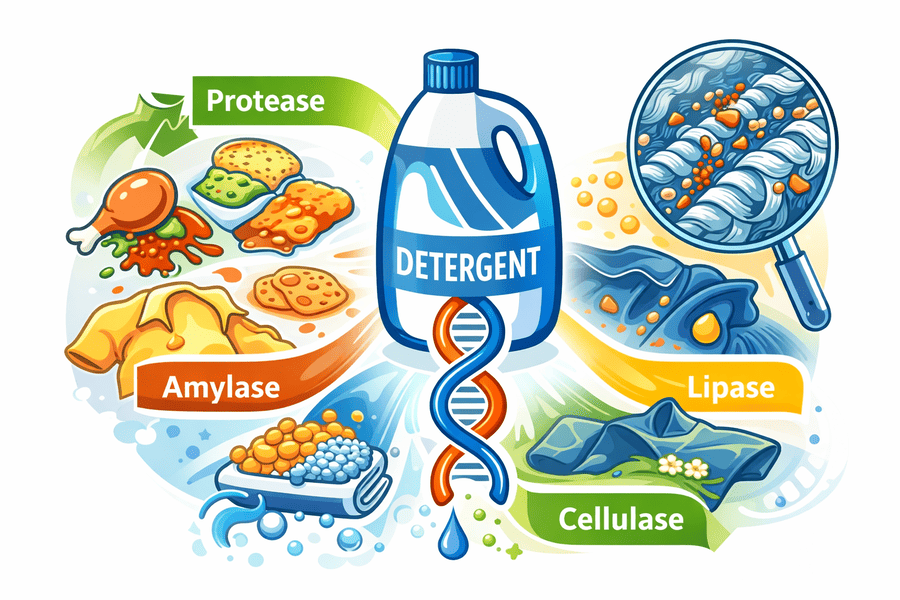
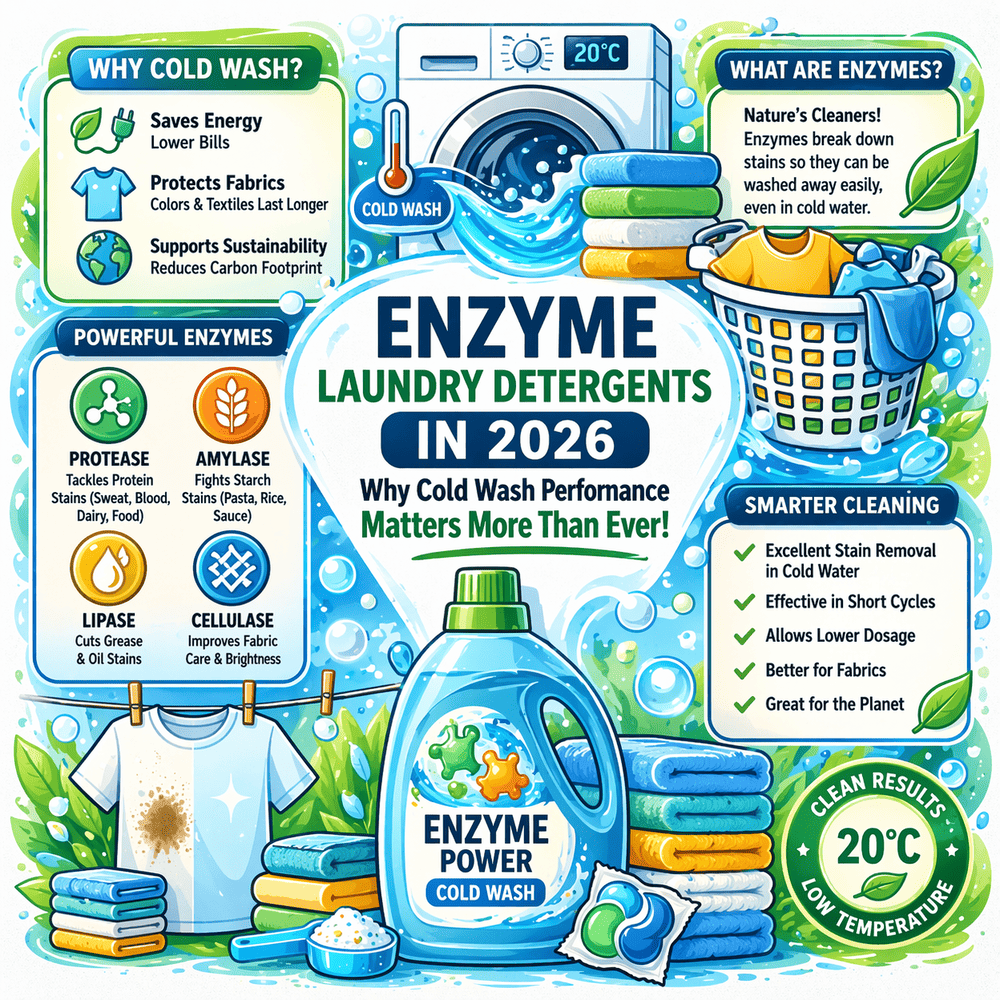
The most common enzyme groups in laundry detergents include:
- Protease for protein stains such as sweat, dairy, blood, and food residues
- Amylase for starch-based stains like pasta sauce, rice, and baked foods
- Lipase for oils, grease, and body soil
- Cellulase for fabric care benefits such as color brightness and reduced fuzzing
Because each enzyme works differently, a balanced multi-enzyme detergent formula can outperform basic detergents in real household conditions.
Cold Water Performance Is Now a Buying Decision
In previous years, fragrance, price, and foam were often stronger buying triggers than formulation technology. In 2026, that is changing. Consumers now read labels for phrases such as “works in cold water,” “energy saving wash,” and “enzyme powered cleaning.” Many buyers have experienced poor results from generic detergents in cold cycles, especially with sportswear, towels, and kitchen fabrics. This makes cold performance a real purchasing factor.
Brands that can demonstrate strong results at low temperatures gain a competitive advantage. This is especially true in e-commerce, where consumers compare product claims quickly and rely on reviews. A well-positioned enzyme detergent for cold wash can stand out in crowded marketplaces.
Benefits Beyond Cleaning Power
Enzyme laundry detergents offer more than stain removal. When properly formulated, they can also support lower dosage systems, which means less packaging and lower shipping costs. They often help reduce the need for aggressive chemicals, making formulas more balanced and fabric-friendly.
Additional benefits include:
- Better performance in short cycles
- Reduced energy use from lower wash temperatures
- Improved fabric lifespan
- Stronger results on mixed household stains
- Better sustainability positioning for brands
These benefits explain why many manufacturers are investing in premium enzyme detergent formulations and concentrated laundry detergents.
Formulation Challenges in 2026
Although enzyme detergents are powerful, they require smart formulation design. Enzymes are sensitive materials that can lose activity if exposed to excessive heat, incompatible preservatives, oxidation stress, or poor storage conditions. This means enzyme detergents must be built around stability, not just cleaning claims.
Key considerations include:
- Moisture control in powders
- pH balance in liquids
- Fragrance compatibility
- Packaging barrier quality
- Long-term activity retention testing
This is why many brands now seek custom laundry detergent formulations rather than generic off-the-shelf products.
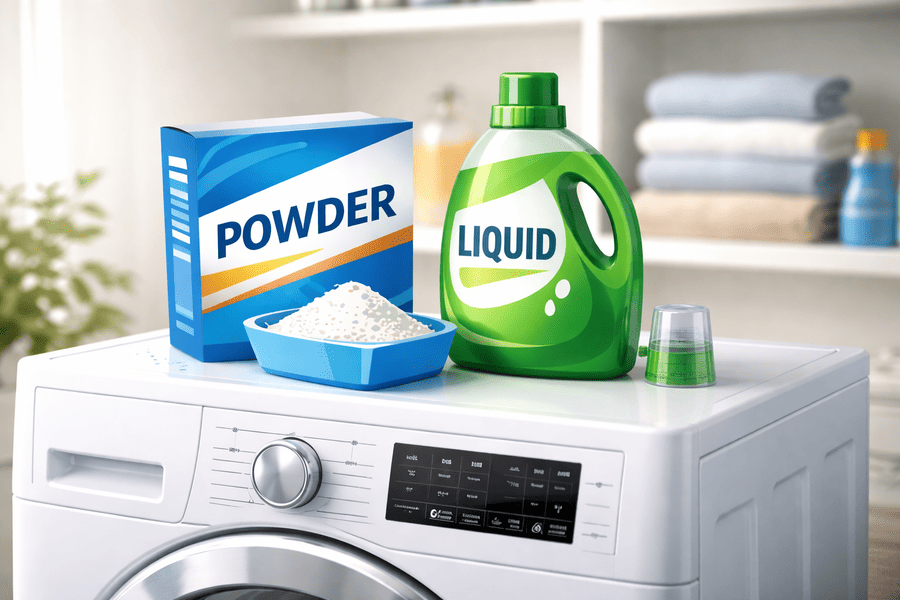
Powder vs Liquid vs Pods: Which Format Wins?
All three formats can use enzymes successfully, but each has advantages.
Powder detergents often offer strong shelf stability when moisture is controlled.
Liquid detergents provide convenience and premium positioning but require tighter preservation and stability systems.
Pods and capsules offer convenience and concentrated dosing, but packaging and dissolution performance are critical.
There is no universal winner. The best format depends on market preference, target pricing, retail channel, and brand identity. Many new brands are exploring private label enzyme detergents in liquid and pod formats because of premium consumer perception.
What This Means for Private Label Brands
For private label buyers and startup brands, cold wash performance is one of the smartest product angles in 2026. It combines measurable benefits with strong consumer interest. Instead of competing only on fragrance or price, brands can compete on proven wash performance and energy-conscious positioning.
Good positioning examples include:
- Enzyme detergent for cold wash cycles
- Sportswear odor removal detergent
- Eco-conscious low-temperature laundry liquid
- Premium concentrated enzyme detergent
- Sensitive fabric cold wash cleaner
These niches align well with growing consumer demand.
Enzyme laundry detergents are no longer a specialist category. In 2026, they are becoming a mainstream expectation as cold wash habits continue to grow. Consumers want lower energy use without sacrificing cleanliness, and enzymes are one of the most effective tools to achieve that balance.
Brands that invest in true cold-wash performance, stable enzyme systems, and clear product positioning are likely to win more attention in the years ahead. For manufacturers, formulators, and private label buyers, the message is clear: cold wash is not a trend anymore—it is the new standard.