
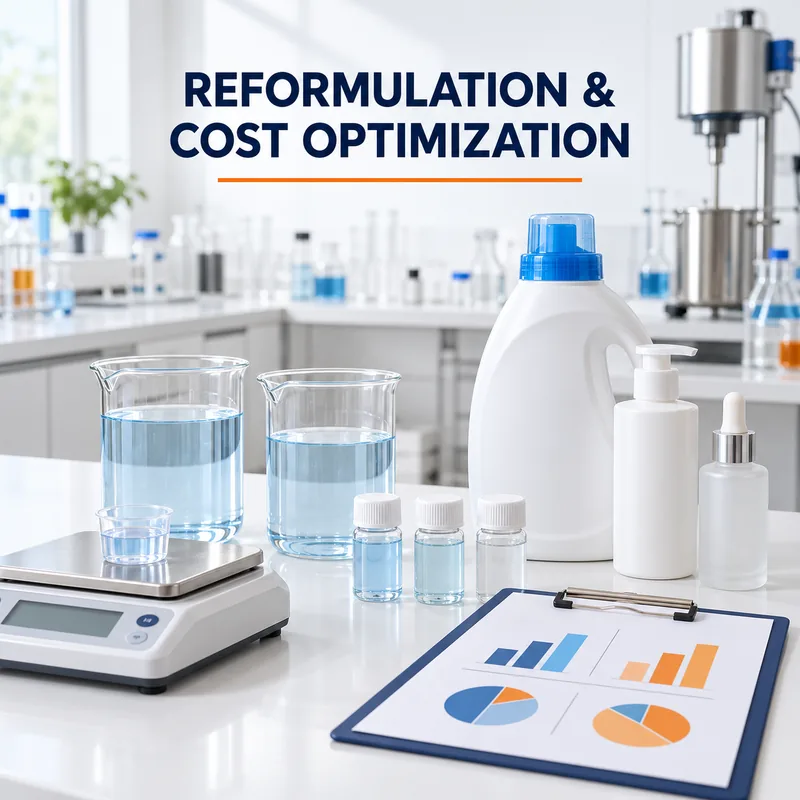
Reformulation & Cost Optimization
Improve your existing formulation with a development project focused on cost, performance and manufacturing requirements. We review detergents, cosmetics, liquid soaps and industrial cleaners to identify opportunities for ingredient substitution, stability improvement, process optimization and concentration changes.
Share your current formula, technical challenges and commercial targets to receive a project proposal tailored to your product.

Product Reformulation Services for Better Commercial and Technical Performance
Develop the next version of your product around clear performance, cost and production targets.
Formulation Market provides product reformulation services for detergents, cosmetics, liquid soaps, industrial cleaners and selected specialty formulations. We help businesses review existing products, investigate technical problems and assess practical opportunities for improvement.
Your project may involve reducing raw material costs, replacing an unavailable ingredient, improving viscosity, resolving separation or converting a ready-to-use cleaner into a concentrate.
We review the formulation together with its manufacturing process, packaging and intended application. This helps define changes that can be evaluated against measurable targets.
Formulation Market is a brand of Star Kimya, a Turkish manufacturer established in 1993. Our approach connects formulation review with practical manufacturing considerations.
Request a Quote
When Should You Consider Reformulation?
An established product may need updating as customer expectations, ingredient availability or production requirements change.
Our reformulation service can support projects involving:
- Raw material costs above the target budget.
- Ingredients that are unavailable or difficult to source.
- Inconsistent viscosity or appearance.
- Separation, cloudiness or precipitation.
- Cleaning performance below the intended target.
- Excessive foam or difficult rinsing.
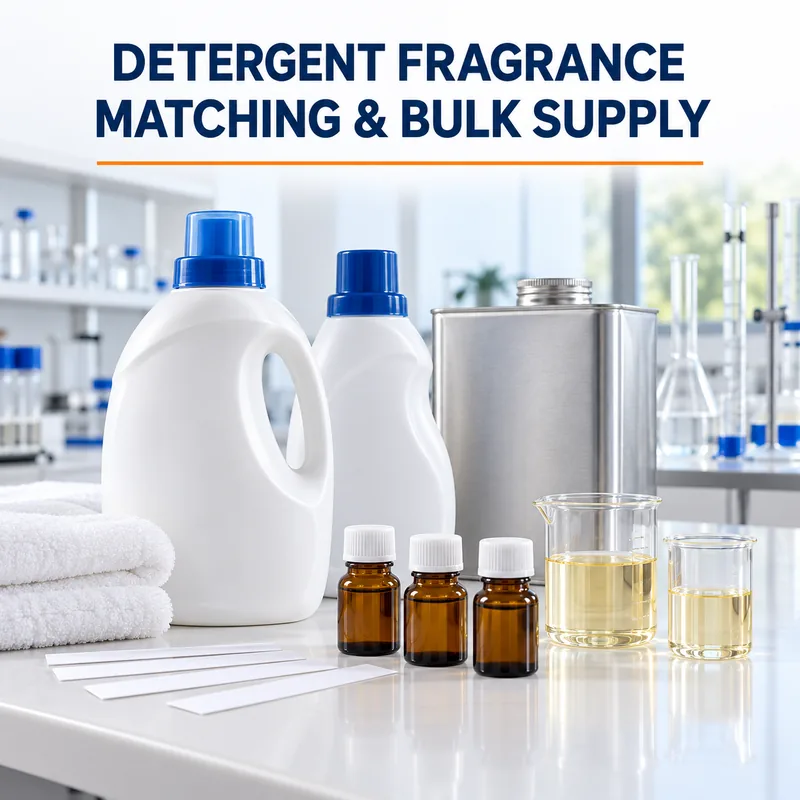
- Fragrance compatibility problems.
- Unwanted tackiness or a greasy after-feel.
- Problems during pilot or commercial production.
- Packaging or dispenser changes.
- Conversion to a concentrated format.
- Changes to the brand’s ingredient policy.
You can request an investigation into one defined issue or a broader review of the product.
Formulation Cost Optimization
Understand where formulation costs come from and which changes are worth evaluating.
We can review the contribution of individual ingredients, their technical functions and the opportunities available within your product brief.
Depending on the formulation, the work may involve:
- Reviewing surfactant selection and balance.
- Assessing alternative ingredient grades.
- Investigating unnecessary overlap between ingredients.
- Reviewing fragrance and colour requirements.
- Evaluating thickening and viscosity control.
- Considering locally available raw materials.
- Reviewing concentration and recommended dosing.
- Assessing processing requirements that affect production cost.
The project begins by defining the characteristics that must be retained and the changes that are acceptable.
Potential savings are assessed against performance, stability, sourcing and manufacturing requirements. A specific saving cannot be confirmed before the formulation and cost information have been reviewed.
Raw Material Substitution & Sourcing Flexibility
Reduce dependence on a single ingredient or supplier where technically feasible.
An ingredient may need replacing because of supply interruptions, long lead times, minimum purchasing quantities or changes to your sourcing strategy.
Our review can consider:
- Alternative suppliers or commercial grades.
- Different active matter concentrations.
- Materials available in your production country.
- Alternative surfactants, solvents or emulsifiers.
- Different thickeners or conditioning ingredients.
- Fragrance and colour substitutions.
- Changes required by a defined ingredient policy.
A replacement may require adjustments elsewhere in the formula or process.
We assess the relevant specifications and identify the evaluation needed before the alternative is introduced into production.
Performance Improvement
Define what better performance means for your product and establish suitable comparison criteria.
Project targets can include:
Detergents & Cleaning Products
- Improved grease or soil removal.
- Better performance at the intended dose.
- More suitable foam behaviour.
- Easier rinsing.
- Reduced residue.
- Better performance in the intended water conditions.
- Improved fragrance compatibility.
Cosmetics & Personal Care Products
- A more suitable texture.
- Improved spreadability.
- Reduced tackiness.
- A lighter or richer after-feel.
- Better ingredient incorporation.
- Improved dispensing.
- A more consistent appearance.
Industrial & Professional Products
- Better performance under specified operating conditions.
- More suitable low-foam behaviour.
- Improved handling or pumpability.
- Better performance after dilution.
- A formulation adapted to the intended equipment.
Acceptance criteria are agreed at the start of the project so that proposed changes can be assessed consistently.
Stability & Compatibility Troubleshooting
Investigate why a product changes during storage, transport, dilution or use.
We can assess briefs involving:
- Phase separation.
- Sediment or precipitation.
- Cloudiness in a product intended to be clear.
- Colour or odour changes.
- Viscosity increase or loss.
- Fragrance separation.
- Problems after temperature changes.
- Changes following raw material substitution.
- Problems after dilution.
- Product and packaging compatibility concerns.
The investigation considers the formulation, ingredient specifications, production records and available test results.
Where included, laboratory work helps evaluate possible causes and proposed adjustments. Longer-term stability conclusions require an appropriate test programme and sufficient observation time.
Concentration & Product Format Changes
Assess whether an existing formulation can be adapted to a different concentration or use pattern.
Project options include:
- Ready-to-Use Cleaner to Liquid Concentrate.
- Standard Laundry Detergent to Concentrated Detergent.
- Conventional Floor Cleaner to Dosing Bottle Concentrate.
- Finished Hand Wash to a Dilutable Base.
- Liquid Cleaning Range to a Refill-Oriented System.
- Bulk Cleansing Base for Local Finishing.
Concentration changes affect more than the amount of water in the formula.
The revised product needs to be assessed for ingredient compatibility, viscosity, dosing, dilution behaviour, packaging and performance at the recommended use level.
Powder refill concepts may require a new formulation approach rather than a direct conversion of an existing liquid product.
Manufacturing Process Optimization
Review how the formula is produced and identify process changes worth evaluating.
Depending on the product, the work can consider:
- Order of ingredient addition.
- Phase preparation.
- Mixing requirements.
- Heating and cooling stages.
- Ingredient incorporation.
- pH and viscosity adjustment.
- Foam introduction during mixing.
- Transfer and filling behaviour.
- Adaptation to available production equipment.
The aim is to develop a practical process that can be checked through pilot production.
Any expected reduction in processing time, energy or losses needs to be confirmed under the actual manufacturing conditions.
Product Categories We Can Review
Our reformulation service covers the following main product groups.
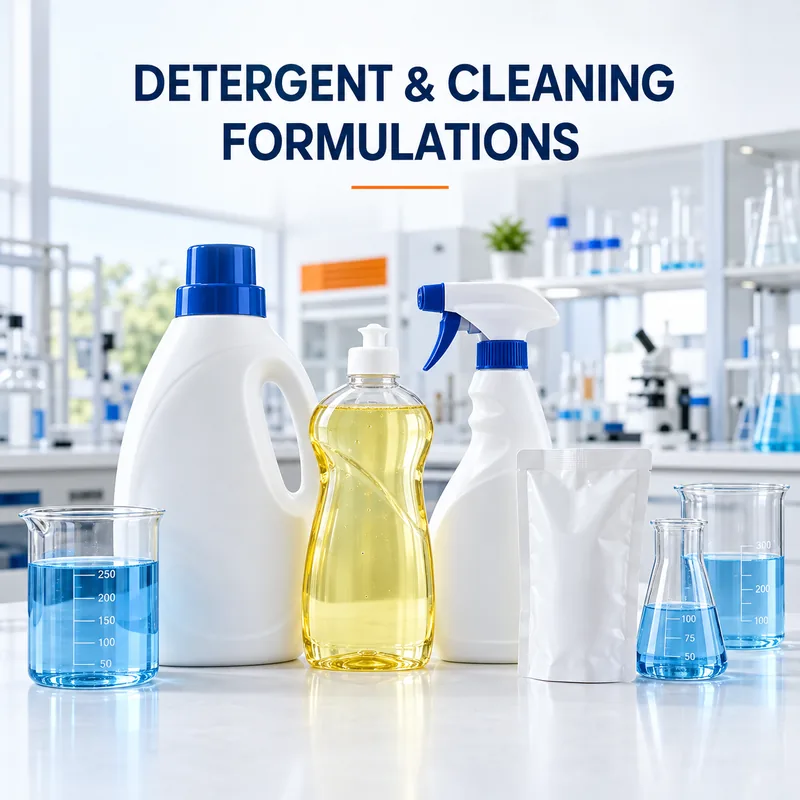
Detergents & Household Cleaning Products
- Liquid Laundry Detergent
- Concentrated Laundry Detergent
- Fabric Softener
- Hand Dishwashing Liquid
- Multi-Purpose Cleaner
- Floor Cleaner
- Bathroom Cleaner
- Glass Cleaner
- Kitchen Degreaser
- Robot Mop Cleaning Solution
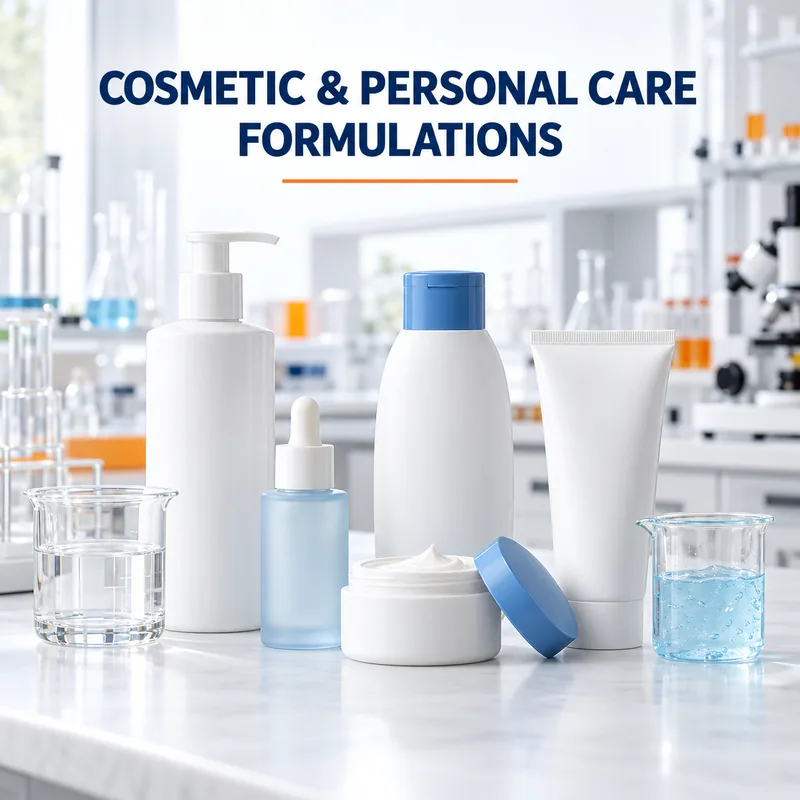
Cosmetics & Personal Care Products
- Facial Serum
- Facial Moisturizer
- Facial Cleansing Gel
- Body Lotion
- Hand Cream
- Shampoo
- Hair Conditioner
- Hair Mask
- Scalp Care Serum
- Body Wash
Liquid Soaps & Cleansing Bases
- Liquid Castile Soap
- Vegetable-Oil Liquid Soap
- Liquid Hand Wash
- Foaming Hand Wash
- Concentrated Soap Base
- Surfactant-Based Cleansing Base
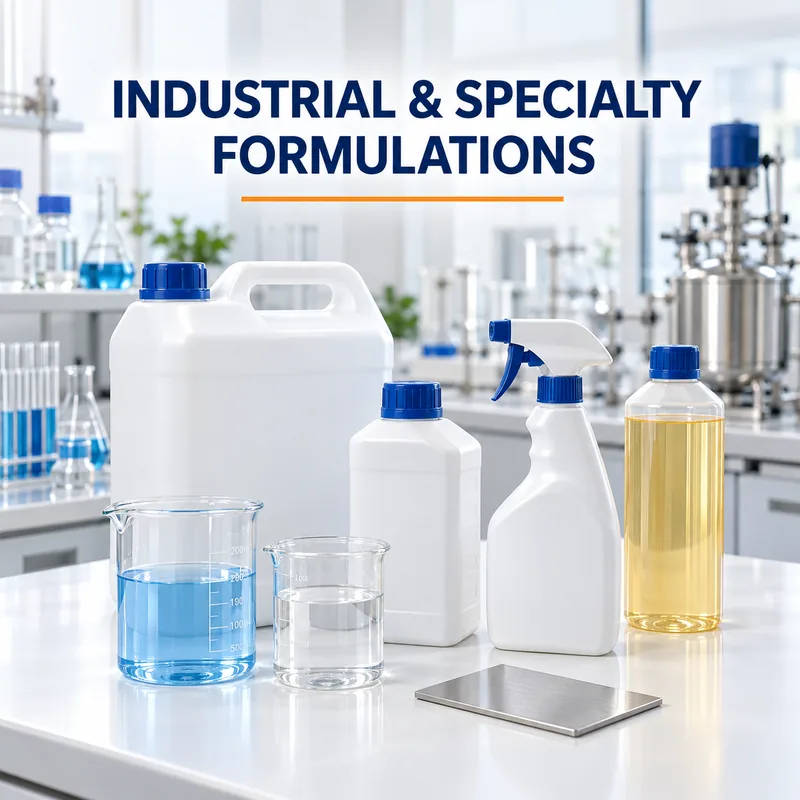
Industrial & Professional Cleaning Products
- Heavy-Duty Degreaser
- Low-Foam Machine Cleaner
- Commercial Laundry Detergent
- Automatic Dishwashing Liquid
- Professional Rinse Aid
- Industrial Descaler
- Vehicle Shampoo
- Professional Cleaning Concentrate
If your product is outside these groups, share the application and technical requirements so that we can assess the brief.
Cost Analysis Based on Your Production Conditions
A useful comparison needs consistent assumptions.
Where available, we use your ingredient specifications, purchase prices and manufacturing information to prepare an indicative cost model.
The agreed analysis can compare:
- Raw material cost per kilogram.
- Raw material cost per batch.
- Cost at the recommended use concentration.
- Alternative ingredient scenarios.
- Concentration and dosing options.
- Additional processing considerations.
Packaging, labour, energy, transport and other costs can be included where the relevant data and project scope support them.
The comparison states its assumptions so that you can assess whether a proposed change is commercially useful.
What You Receive
The exact deliverables are confirmed in your project quotation. A reformulation package can include:
Formulation Review
- Review of the supplied composition.
- Ingredient function assessment.
- Identification of issues requiring investigation.
- Proposed development priorities.
- Agreed performance and cost targets.
Revised Formulation
- Updated formulation with ingredient percentages.
- Raw material names and functions.
- Recommended specifications.
- Suitable alternatives where technically appropriate.
- Explanation of the main changes.
Updated Manufacturing Instructions
- Revised step-by-step procedure.
- Order of ingredient addition.
- Relevant mixing and temperature requirements.
- pH and viscosity adjustment guidance.
- Practical production notes.
- Pilot batch recommendations.
Cost Comparison
- Indicative cost of the original formulation.
- Indicative cost of the proposed formulation.
- Stated pricing and calculation assumptions.
- Alternative scenarios where included.
- Recommended next steps for commercial evaluation.
Specifications & Technical Documentation
Depending on the project, support can include:
- Updated product specifications.
- Quality control guidance.
- Technical Data Sheet — TDS.
- Safety Data Sheet — SDS, where applicable.
- COA template or specification framework.
- Relevant classification and label information.
- Recommended stability and compatibility evaluations.
Documentation reflects the revised composition and available supporting information.
Development Support
- One formulation revision within the agreed scope.
- Pilot production guidance.
- Review of agreed feedback.
- Recommendations for further testing where needed.
Laboratory prototypes, sample quantities, specialist tests and additional development rounds are specified in the quotation.
Our Reformulation Process
1. Share Your Current Product Information
Complete the Request a Quote form and describe what you want to improve.
You can initially provide a brief description. An NDA can be arranged before the detailed formulation and confidential records are shared.
2. Define the Targets
We review the available information and agree on priorities.
These may include a target cost, a performance requirement, an ingredient replacement or a clearly defined technical problem.
3. Assess & Develop Alternatives
The formulation and process are reviewed against the agreed brief.
Where included, laboratory work and prototype comparisons help assess proposed changes.
4. Review the Results
The proposed formulation is compared with the agreed targets.
Feedback, test results and practical production considerations guide the final adjustments within scope.
5. Prepare the Revised Technical Package
We provide the agreed formula, manufacturing instructions, cost analysis and supporting documents.
Pilot production and any additional validation steps are identified before commercial implementation.
Information That Helps Us Assess Your Project
Useful information can include:
- Current formula with percentages.
- Raw material trade names and specifications.
- Existing manufacturing procedure.
- Current ingredient prices.
- Product specifications and test results.
- Description of the problem.
- Photographs or samples showing the issue.
- Current packaging details.
- Target market and intended use.
- Performance characteristics that must be retained.
- Target cost or desired improvement.
If some information is unavailable, tell us what you have. We will identify the practical starting point and any limits this places on the assessment.
Confidentiality & Formula Ownership
Your formulation, cost information and production records can be reviewed under an NDA.
Before work begins, the project agreement defines confidentiality, permitted use of the supplied information and ownership of the development outputs.
You can use the agreed technical package with your own production team or selected manufacturer, subject to the project terms.
Frequently Asked Questions
Can you reduce the cost of my formula while retaining its performance?
We can assess opportunities against agreed performance targets. Feasibility depends on the original formulation, ingredient prices and acceptable changes. The outcome is evaluated through the agreed comparison work.
Do I need to share the complete formula?
A detailed review usually requires the composition and raw material specifications. An NDA can be arranged before these are shared.
What if I only have a finished sample?
A sample can help define a new development brief, but it does not provide the full formula or manufacturing history. We assess the available information before proposing the appropriate scope.
Can you replace an ingredient that is no longer available?
Yes. We can review potential alternatives and the adjustments needed to incorporate them. Suitable evaluation is required before production use.
Can you investigate separation or viscosity problems?
Yes. Share the formula, process, ingredient specifications and details of when the problem occurs. Laboratory investigation can be included in the quotation.
Can you help convert my product into a concentrate?
Yes. We assess technical feasibility, intended dosing, dilution behaviour and packaging requirements before defining the development work.
Will the fragrance and appearance remain the same?
Tell us which characteristics must be retained. Proposed changes are evaluated against those requirements, and any expected differences are discussed during development.
Are testing and physical samples included?
The quotation specifies prototypes, sample quantities and testing. Additional stability, performance or packaging work is agreed where required.
How much does reformulation cost?
Pricing depends on the complexity of the formula, the issues being investigated, laboratory work and required documentation. Submit your brief to receive a project quotation.
How long does a reformulation project take?
The timeline is confirmed after the information is reviewed. Ingredient sourcing, prototype revisions and testing requirements affect the schedule.
Request a Quote for Your Reformulation Project
Tell us what you want to improve: cost, cleaning performance, texture, stability, ingredient availability or manufacturing efficiency.
Share your current product information and the targets that matter most to your business.
Have a product problem but are unsure of the cause? Describe the issue and we can assess the appropriate starting point.
Formulation Market provides custom formulation, technical documentation, fragrance development, and manufacturing support for brands, startups, and established manufacturers. Whether you are developing a new product, improving an existing formula, or preparing for production, our services are tailored to your target market, performance requirements, and budget. Depending on the agreed scope, your project may include formulation files, manufacturing instructions, raw material recommendations, technical documents, cost analysis, and packaging support. Deliverables, development timelines, testing requirements, and commercial terms are confirmed in your quotation. Confidentiality arrangements and an NDA are available upon request. To get started, click “Request a Quote” and tell us about your project.