Blog
Vitamin C Brightening Serum: Benefits, Ingredients, Antioxidant Technology and Cosmetic Formulation Development

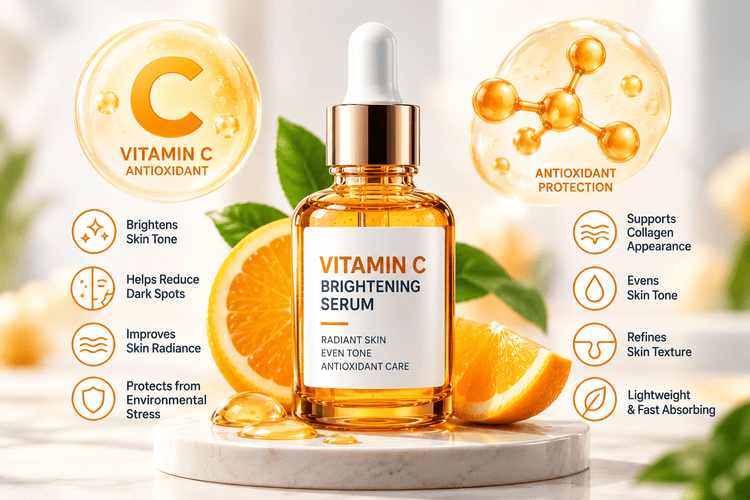
Vitamin C Brightening Serum is one of the most established and widely recognized product categories in modern facial skincare. Known for its antioxidant properties and potential to improve the appearance of uneven skin tone, vitamin C has become a key ingredient in premium skincare products designed for brighter, smoother, and healthier-looking skin.
As consumers increasingly seek skincare products that combine scientifically supported ingredients with visible cosmetic benefits, vitamin C serums remain an important part of anti-aging, brightening, and daily antioxidant skincare routines.
However, not all vitamin C serums are the same. Different vitamin C ingredients have distinct chemical properties, stability requirements, and cosmetic performance characteristics. A product containing pure L-ascorbic acid may behave differently from one formulated with a stabilized vitamin C derivative.
For cosmetic brands, Vitamin C Brightening Serum offers significant opportunities for product differentiation through ingredient technology, sensory performance, packaging innovation, and exclusive formulation development.
This guide explores what vitamin C brightening serums are, how vitamin C works in skincare, their potential benefits, different vitamin C derivatives, suitability for various skin types, product stability considerations, and opportunities for custom cosmetic formulation development.
What Is Vitamin C Brightening Serum?
A Vitamin C Brightening Serum is a facial skincare product containing vitamin C or a selected vitamin C derivative, typically developed to improve the appearance of uneven skin tone, dullness, and visible signs of environmental stress.
Vitamin C, chemically known as ascorbic acid, is a water-soluble antioxidant naturally present in the human body.
In skin biology, vitamin C participates in processes associated with collagen synthesis and antioxidant defense.
In cosmetic skincare, vitamin C is commonly used in products targeting:
- Dull and tired-looking skin.
- Uneven skin tone.
- The appearance of dark spots.
- Visible signs of photoaging.
- Skin radiance and smoothness.
- Antioxidant skincare protection.
Vitamin C serums are generally designed as lightweight leave-on products that can be incorporated into daily skincare routines.
The finished product may contain pure ascorbic acid or a derivative selected according to the desired stability, skin compatibility, and product positioning.
How Does Vitamin C Work in Skincare?
Vitamin C is an antioxidant that can participate in reactions involving reactive oxygen species.
Environmental factors such as ultraviolet radiation and pollution can contribute to oxidative stress in the skin.
Oxidative stress is associated with processes that influence the appearance and condition of skin over time.
Vitamin C has been studied for its potential to support antioxidant defenses and influence processes related to skin pigmentation and collagen synthesis.
However, the cosmetic benefits of a finished serum depend on whether the selected vitamin C ingredient remains stable and is available under the product’s intended conditions of use.
Antioxidant Activity
Vitamin C can act as an antioxidant by participating in reactions that neutralize certain reactive species.
This is one reason it is widely used in skincare products positioned around environmental stress and visible signs of aging.
A topical antioxidant serum does not replace sunscreen or eliminate ultraviolet damage.
Skin Brightening
Vitamin C has been investigated for its influence on pathways associated with melanin production.
This has contributed to its use in cosmetic products targeting the appearance of uneven pigmentation and dark spots.
Collagen-Related Skin Biology
Vitamin C is required for normal collagen synthesis in the body.
Its biological role has encouraged interest in topical products designed to improve the appearance of skin firmness and fine lines.
However, claims relating to increased collagen production from a specific cosmetic serum require appropriate evidence.
Benefits of Vitamin C Brightening Serum
Vitamin C serums are commonly marketed as multifunctional skincare products.
Their benefits depend on the selected vitamin C technology, the finished formulation, and the available supporting evidence.
1. Improves the Appearance of Uneven Skin Tone
Uneven skin tone is one of the most common cosmetic concerns addressed by vitamin C skincare.
A suitably developed vitamin C serum may help improve the appearance of discoloration and support a more uniform-looking complexion.
Results depend on the type of pigmentation concern, product characteristics, and consistency of use.
2. Supports Brighter-Looking Skin
Vitamin C is frequently associated with skin radiance.
A well-designed serum may contribute to a brighter-looking complexion through antioxidant and skin-conditioning effects.
Hydrating ingredients may also improve the appearance of dull skin.
3. Provides Antioxidant Skincare Benefits
Antioxidant ingredients are used in products intended to help protect against certain effects of environmental oxidative stress.
The antioxidant performance of a finished product depends on ingredient stability and relevant testing.
4. Improves the Appearance of Fine Lines
Selected vitamin C products have been investigated for their effects on visible signs of skin aging.
Improvements in hydration and skin texture may also make fine lines appear less noticeable.
5. Supports Smoother-Looking Skin
A serum containing appropriate moisturizing and conditioning ingredients may help improve the appearance and feel of the skin surface.
6. Complements Daily Sun Protection
Vitamin C serums are often used alongside sunscreen in morning skincare routines.
However, vitamin C is not a UV filter and does not provide a validated SPF value.
Broad-spectrum sunscreen remains essential for protecting the skin against ultraviolet exposure.
Types of Vitamin C Used in Cosmetic Serums
One of the most important considerations in vitamin C skincare is the selection of the vitamin C ingredient.
Different forms of vitamin C have different properties.
L-Ascorbic Acid
L-ascorbic acid is the biologically active form of vitamin C and one of the most extensively studied forms used in topical skincare.
It is commonly associated with antioxidant and brightening benefits.
However, pure ascorbic acid can be sensitive to oxidation and may require carefully controlled formulation and packaging conditions.
Sodium Ascorbyl Phosphate
Sodium Ascorbyl Phosphate is a water-soluble vitamin C derivative used in cosmetic skincare.
It is often selected for product concepts requiring different stability or pH characteristics from pure ascorbic acid.
Its cosmetic performance depends on the finished product and the extent to which it can deliver relevant vitamin C activity in skin.
Magnesium Ascorbyl Phosphate
Magnesium Ascorbyl Phosphate is another vitamin C derivative used in moisturizing and brightening skincare products.
It may be suitable for certain cosmetic systems where pure ascorbic acid presents stability challenges.
Ascorbyl Glucoside
Ascorbyl Glucoside is a vitamin C derivative commonly used in facial serums and creams.
It is frequently associated with skin-brightening product positioning.
3-O-Ethyl Ascorbic Acid
3-O-Ethyl Ascorbic Acid is a modified vitamin C ingredient used in premium cosmetic skincare.
Its properties can make it attractive for certain brightening serum concepts.
Tetrahexyldecyl Ascorbate
Tetrahexyldecyl Ascorbate is an oil-soluble vitamin C derivative used in oil-based and emulsion skincare products.
It offers different formulation possibilities compared with water-soluble vitamin C ingredients.
Comparing Vitamin C Ingredients
| Vitamin C ingredient | General characteristics | Common cosmetic positioning |
|---|---|---|
| L-Ascorbic Acid | Water-soluble, oxidation-sensitive | Antioxidant and brightening skincare |
| Sodium Ascorbyl Phosphate | Water-soluble derivative | Brightening and skin conditioning |
| Magnesium Ascorbyl Phosphate | Water-soluble derivative | Moisturizing and brightening products |
| Ascorbyl Glucoside | Stabilized vitamin C derivative | Uneven skin tone and radiance |
| 3-O-Ethyl Ascorbic Acid | Modified vitamin C ingredient | Premium brightening serums |
| Tetrahexyldecyl Ascorbate | Oil-soluble derivative | Premium antioxidant skincare |
No single vitamin C derivative is automatically superior for every cosmetic application.
The appropriate ingredient depends on the intended product, target consumer, desired sensory characteristics, and available evidence.
What Percentage of Vitamin C Is Best for a Facial Serum?
Vitamin C serums are available in a wide range of concentrations.
Some products contain relatively low levels of vitamin C derivatives, while others are marketed as high-strength treatments.
The appropriate concentration depends on the exact vitamin C ingredient.
A product containing 10% L-ascorbic acid cannot be directly compared with a product containing 10% of a different vitamin C derivative because the ingredients have different molecular structures and properties.
Higher concentrations do not necessarily produce better cosmetic results.
They may also introduce additional challenges related to skin tolerability, stability, and sensory performance.
For cosmetic brands, the optimal concentration should be established through technical evaluation and finished-product testing rather than marketing expectations alone.
Vitamin C Serum for Different Skin Types
Normal Skin
Vitamin C serums can be developed for normal skin using a variety of ingredient technologies.
The product should provide a comfortable sensory experience and appropriate hydration.
Dry Skin
Consumers with dry skin may prefer vitamin C serums that incorporate additional moisturizing and barrier-supporting ingredients.
A serum may be followed by a suitable moisturizer.
Oily Skin
Lightweight vitamin C serums may appeal to consumers with oily skin who prefer non-greasy textures.
Product design should balance skin feel, stability, and cosmetic performance.
Combination Skin
Combination skin may benefit from lightweight formulations that provide hydration without excessive heaviness.
Sensitive Skin
Some vitamin C products, particularly those containing high concentrations of acidic L-ascorbic acid, may cause stinging or irritation.
Consumers with sensitive skin may prefer products designed specifically for tolerability.
The complete formulation and individual skin response are more important than the vitamin C ingredient name alone.
Vitamin C Serum vs Niacinamide Serum
Vitamin C and niacinamide are both widely used in facial skincare.
However, they are associated with somewhat different cosmetic benefits and formulation characteristics.
“Niacinamide 10% + Zinc Serum” is commonly positioned for oily skin, uneven skin tone, visible pores, and skin barrier support.
Vitamin C Brightening Serum is more frequently positioned around antioxidant skincare, radiance, and the appearance of pigmentation.
| Feature | Vitamin C Brightening Serum | Niacinamide Serum |
|---|---|---|
| Main ingredient | Vitamin C or derivative | Niacinamide |
| Primary positioning | Antioxidant care and brightening | Barrier support, oiliness, uneven tone |
| Ingredient stability | Depends strongly on vitamin C form | Generally favorable within suitable conditions |
| Skin tolerability | Depends on derivative, concentration and pH | Depends on concentration and formulation |
| Product applications | Serums, creams, antioxidant treatments | Serums, moisturizers, body care |
Both ingredients can be incorporated into modern skincare routines.
The compatibility of a combined formulation must be established using the specific raw materials and product conditions.
Vitamin C Serum vs Tranexamic Acid Serum
Vitamin C and tranexamic acid are both discussed in skincare products targeting the appearance of uneven pigmentation.
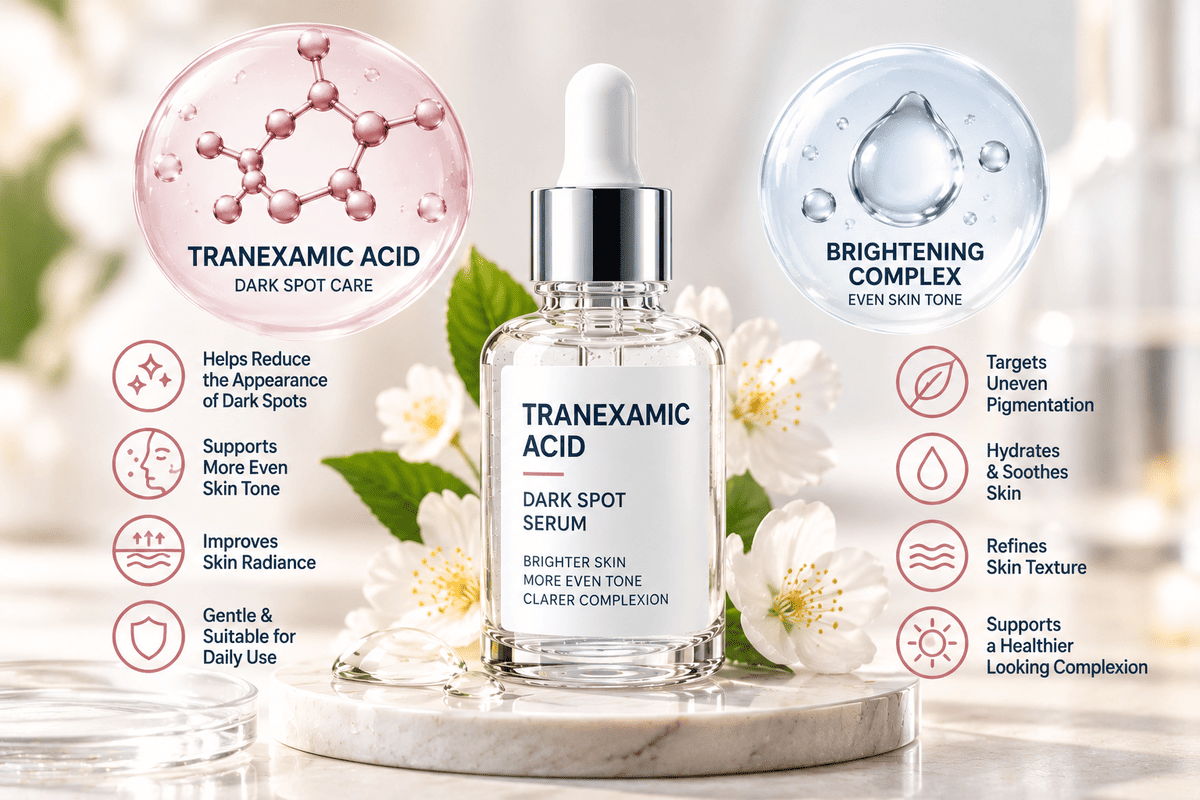
“Tranexamic Acid Dark Spot Serum” focuses on a different ingredient technology associated with pigmentation-related skincare.
Vitamin C is additionally recognized for its antioxidant properties.
The two ingredients may be considered for different product concepts or potentially combined in a technically suitable formulation.
However, their performance should not be assumed to be identical.
Brands should avoid making medical treatment claims without appropriate regulatory review.
Can Vitamin C Be Combined with Peptides?
Vitamin C and peptides are frequently associated with premium anti-aging skincare.
However, their compatibility depends on the specific ingredients selected.
Pure L-ascorbic acid is commonly formulated under acidic conditions, while certain peptides may have different preferred stability environments.
This does not mean that all vitamin C ingredients are incompatible with all peptides.
Vitamin C derivatives may offer different development possibilities.
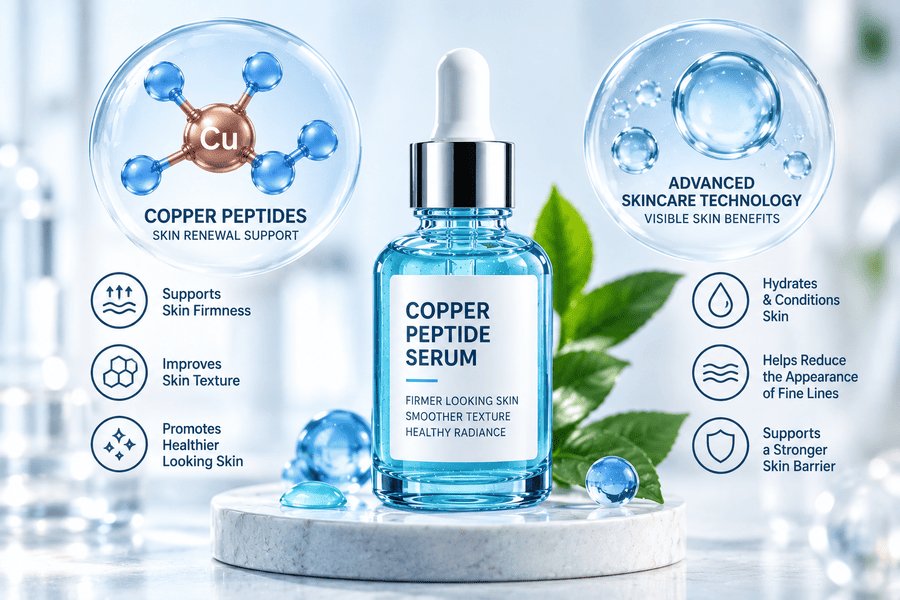
Brands interested in peptide-based skincare can explore “Multi-Peptide Anti-Aging Serum” and “Copper Peptide Serum”.
Vitamin C Serum and Skin Barrier Care
A vitamin C serum may be incorporated into a skincare routine alongside products designed to support the skin barrier.
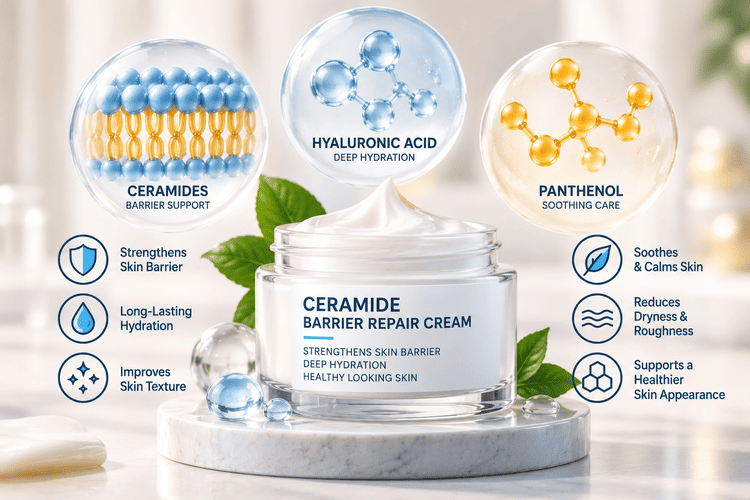
For example, “Ceramide Barrier Repair Cream” may provide complementary moisturizing benefits.
Panthenol, hyaluronic acid, glycerin, and other conditioning ingredients are also commonly associated with moisturizing skincare.
The objective is to create a balanced routine that addresses cosmetic concerns without causing unnecessary irritation.
Why Do Some Vitamin C Serums Turn Yellow or Brown?
One of the most recognized challenges with certain vitamin C serums is discoloration during storage.
Pure ascorbic acid can undergo oxidation and degradation, particularly under unfavorable conditions.
Exposure to oxygen, light, heat, and other formulation factors may contribute to changes in appearance.
A gradual yellow or brown color change can indicate chemical changes in some vitamin C products.
However, color alone cannot reliably determine the remaining concentration or effectiveness of vitamin C.
Some finished products are intentionally colored by other ingredients.
For cosmetic manufacturers, analytical stability testing is more reliable than visual inspection alone.
Why Is Vitamin C Serum Stability Important?
Stability is a critical factor in developing high-quality vitamin C skincare products.
An unstable serum may experience changes in color, odor, pH, ingredient concentration, or overall performance.
These changes can affect consumer confidence and product quality.
Important development considerations include:
- Vitamin C ingredient identity.
- Oxidation sensitivity.
- Ingredient compatibility.
- pH requirements.
- Packaging characteristics.
- Storage conditions.
- Shelf-life evaluation.
- Microbiological quality.
- Finished-product performance.
Different vitamin C derivatives require different technical approaches.
A professional development process should evaluate the actual finished product under relevant storage and use conditions.
Packaging Options for Vitamin C Brightening Serum
Packaging selection is especially important for oxidation-sensitive vitamin C products.
Common packaging formats include:
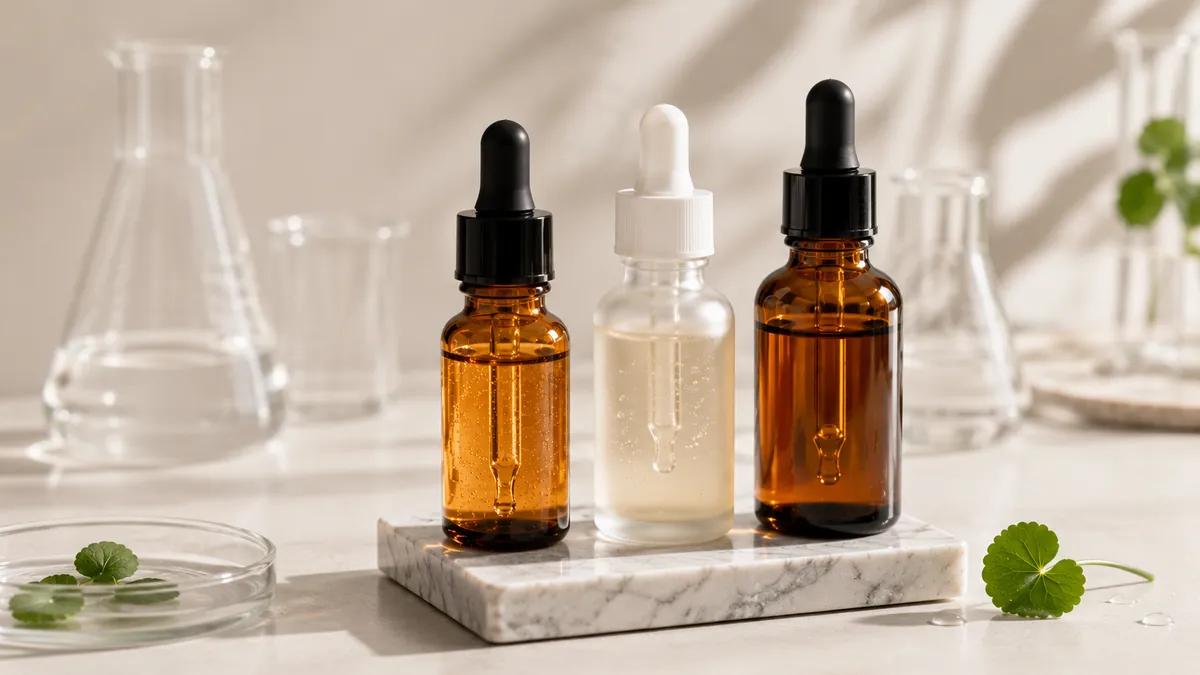
- Amber glass dropper bottles.
- Opaque pump dispensers.
- Airless packaging systems.
- Single-use skincare ampoules.
- Specialized protective containers.
Each format has advantages and limitations.
For example, amber glass can reduce exposure to certain wavelengths of light, but it does not eliminate oxygen exposure.
Airless packaging may reduce repeated air contact, although its effectiveness depends on the actual container design.
Packaging should be evaluated through compatibility and stability testing.
How Long Does Vitamin C Serum Take to Show Results?
The time required to observe cosmetic benefits depends on the product and the intended outcome.
Hydration-related improvements may be noticeable relatively quickly.
Changes in the appearance of uneven pigmentation or fine lines may require several weeks of consistent use.
Individual results can vary according to skin condition, product composition, and skincare habits.
There is no universal timeframe that applies to all vitamin C serums.
Specific performance timelines should be supported by appropriate finished-product studies.
Why Vitamin C Serums Are Attractive for Cosmetic Brands
Vitamin C is one of the most recognizable ingredients in the global skincare market.
This consumer familiarity makes vitamin C serums commercially attractive to both established beauty companies and emerging brands.
The category offers opportunities for different product positioning strategies.
Examples include:
- Premium antioxidant facial serums.
- Lightweight daily brightening serums.
- Vitamin C products for mature-looking skin.
- Sensitive-skin-oriented vitamin C concepts.
- Oil-soluble vitamin C skincare.
- Multifunctional antioxidant skincare collections.
Brands can differentiate their products through ingredient technology, packaging, sensory performance, and substantiated benefits.
However, recognizable ingredients alone do not guarantee commercial success.
Product stability, consumer satisfaction, and consistent quality remain essential.
Regulatory Considerations for Vitamin C Cosmetics
Vitamin C-containing cosmetic products must comply with the requirements of their intended markets.
In the European Union, cosmetic products are subject to Regulation (EC) No 1223/2009 and applicable safety, labeling, documentation, and notification requirements.
In the United States, relevant provisions of the Federal Food, Drug, and Cosmetic Act and MoCRA must be considered.
Cosmetic claims such as improves skin radiance or reduces the appearance of uneven skin tone should be supported by appropriate evidence.
Claims suggesting treatment of medical pigmentation disorders or other diseases may change the product’s regulatory classification.
The use of a familiar vitamin ingredient does not remove the need for a finished-product safety assessment.
Custom Vitamin C Brightening Serum Formulation Development
For cosmetic brands, exclusive vitamin C serum development provides an opportunity to create products with distinctive technical and commercial characteristics.
A custom project may focus on ingredient selection, product texture, packaging compatibility, target-market requirements, and desired cosmetic benefits.
The development process begins by defining the product concept and performance objectives.
Important considerations include the intended consumer group, vitamin C technology, sensory requirements, target cost, packaging format, and required testing.
A professional development project should also address product stability and manufacturing feasibility.
The objective is to create a technically structured cosmetic product that can be evaluated for safety, performance, and commercial production.
Custom Cosmetic Formulation Services with FormulationMarket
At FormulationMarket, we provide custom cosmetic formulation research and development services for beauty brands, entrepreneurs, and companies seeking exclusive skincare products.
Our services focus on developing cosmetic formulations according to the client’s product concept, target market, technical requirements, and manufacturing objectives.
For Vitamin C Brightening Serum projects, we evaluate the desired ingredient technology, product characteristics, and commercial feasibility.
Depending on the agreed scope, a technical development package may include:
- Product definition and target specifications.
- Raw material selection and ingredient information.
- Laboratory formulation development.
- Manufacturing process documentation.
- Quality-control recommendations.
- Stability and compatibility guidance.
- Supporting technical documentation.
Exclusive formulation ownership and usage rights are defined through the applicable project agreement.
FormulationMarket specializes in cosmetic formulation research and development. We do not commercially manufacture cosmetic products.
Clients may arrange commercial production through qualified cosmetic manufacturers after completing the required validation, safety assessments, and regulatory procedures.
Visit www.formulationmarket.com to explore our custom cosmetic formulation development services.
Frequently Asked Questions About Vitamin C Brightening Serum
What does Vitamin C Brightening Serum do?
Vitamin C serums are commonly used to improve the appearance of uneven skin tone, support skin radiance, and provide antioxidant skincare benefits.
Is vitamin C serum suitable for daily use?
Many vitamin C serums are designed for daily use. Suitability depends on the ingredient technology, concentration, finished formulation, and individual skin tolerance.
Can vitamin C serum remove dark spots?
Some vitamin C products may improve the appearance of dark spots and uneven pigmentation. Results depend on the product and the underlying pigmentation concern.
Is 20% vitamin C better than 10%?
Not necessarily. Higher concentrations do not automatically provide better results and may increase irritation or stability challenges.
Can vitamin C serum be used with niacinamide?
Yes, depending on the products involved. Compatibility depends on the specific ingredients and formulation conditions.
Should vitamin C serum be used in the morning or evening?
Many vitamin C serums are suitable for morning or evening use according to their product instructions. Morning application is commonly paired with sunscreen.
Does vitamin C serum replace sunscreen?
No. Vitamin C does not provide a validated SPF value and should not replace broad-spectrum sunscreen.
Why does vitamin C serum change color?
Certain vitamin C ingredients, particularly pure ascorbic acid, may undergo oxidation or degradation. Color changes should be evaluated in the context of the finished product and its stability data.
Can cosmetic brands develop exclusive vitamin C serums?
Yes. Custom formulation development allows brands to establish their own ingredient preferences, product characteristics, and technical specifications.
Conclusion
Vitamin C Brightening Serum remains a significant product category in modern skincare because of its recognizable ingredient technology and applications in antioxidant and brightening cosmetic products.
Different vitamin C ingredients offer different development possibilities, making ingredient selection an important part of product design.
Successful vitamin C serum development requires careful attention to stability, compatibility, packaging, tolerability, and substantiated performance claims.
For cosmetic brands, custom vitamin C serum formulation development offers opportunities to create differentiated products with distinctive sensory characteristics and premium positioning.
Through professional formulation research and development, businesses can transform established vitamin C skincare technology into products designed for consistent quality and commercial feasibility.