Blog
Tranexamic Acid Dark Spot Serum: Benefits, Hyperpigmentation Care and Cosmetic Formulation Development

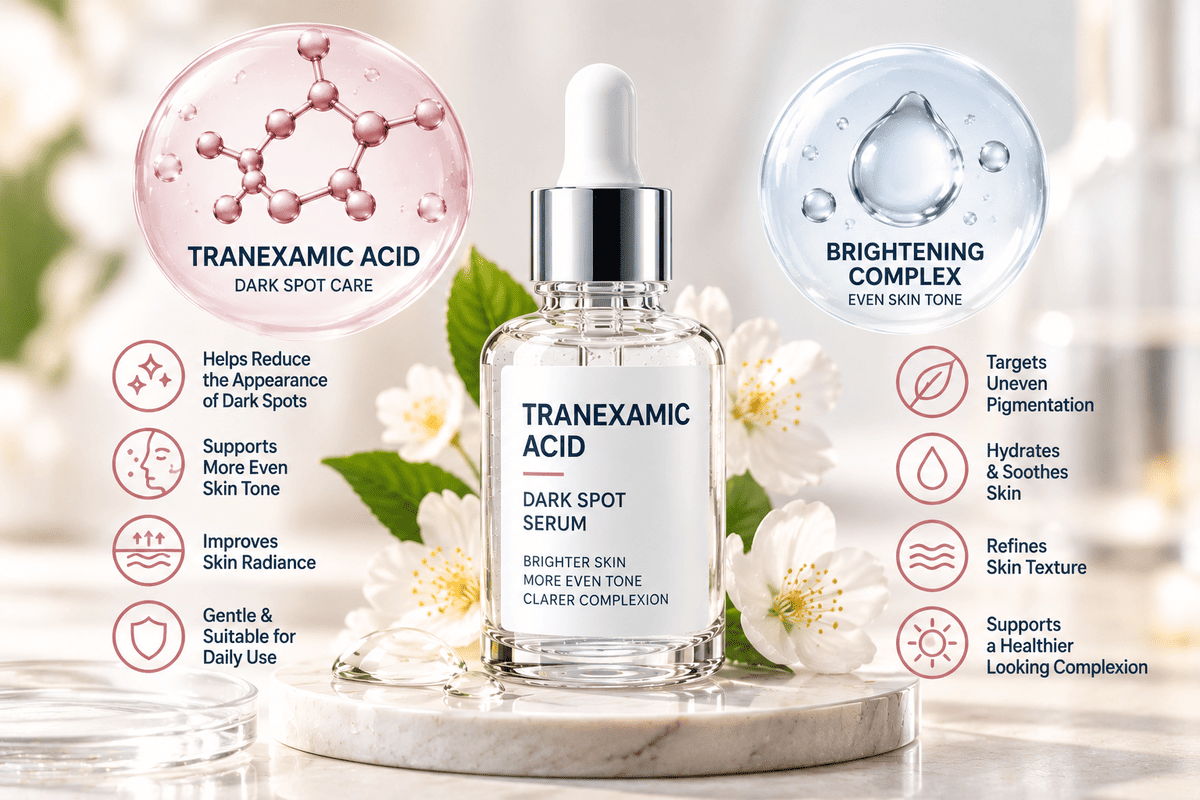
Tranexamic Acid Dark Spot Serum is an increasingly recognized skincare product category developed for consumers seeking to improve the appearance of dark spots, uneven skin tone, and pigmentation-related cosmetic concerns.
As demand grows for targeted brightening skincare products, tranexamic acid has attracted attention from cosmetic brands, dermatology-focused skincare developers, and consumers interested in advanced skin tone management.
Originally developed for medical applications, tranexamic acid has also been investigated in dermatological research involving pigmentation-related conditions. This scientific interest has contributed to its growing presence in topical skincare products.
However, the use of tranexamic acid in cosmetic products requires careful consideration of ingredient concentration, product safety, regulatory classification, and the distinction between cosmetic benefits and medical treatment claims.
For cosmetic brands, Tranexamic Acid Dark Spot Serum represents an opportunity to develop specialized skincare products focused on improving the appearance of uneven pigmentation while combining established moisturizing and skin-conditioning technologies.
This guide explains what tranexamic acid serum is, how the ingredient works, its potential benefits, differences from other brightening ingredients, skin compatibility, regulatory considerations, and opportunities for custom cosmetic formulation development.
What Is Tranexamic Acid Dark Spot Serum?
Tranexamic Acid Dark Spot Serum is a facial skincare product containing tranexamic acid, typically developed to improve the appearance of uneven skin tone and visible dark spots.
Tranexamic acid is a synthetic compound derived from the amino acid lysine.
In medicine, tranexamic acid is used for its antifibrinolytic properties, meaning it can inhibit certain processes involved in the breakdown of blood clots.
Its dermatological applications have been investigated separately, particularly in research involving pigmentation-related conditions.
In cosmetic skincare, tranexamic acid is generally positioned as a targeted ingredient for improving the appearance of discoloration.
A typical product concept may focus on:
- Uneven-looking skin tone.
- The appearance of dark spots.
- Dull or tired-looking skin.
- Visible discoloration associated with environmental exposure.
- Overall skin radiance.
- Multifunctional brightening skincare.
The effectiveness of a finished serum depends on the complete product composition, ingredient concentration, skin compatibility, and supporting performance evidence.
How Does Tranexamic Acid Work in Skincare?
Tranexamic acid has been investigated for its potential influence on biological pathways associated with skin pigmentation.
One proposed mechanism involves interactions with the plasminogen activation system, which may influence signaling processes associated with melanocyte activity.
Melanocytes are specialized cells responsible for producing melanin, the pigment that contributes to skin color.
Changes in melanin production and distribution can influence the appearance of uneven pigmentation.
Research involving tranexamic acid has explored whether modifying certain signaling pathways may help improve pigmentation-related skin conditions.
However, the effects observed in medical studies cannot automatically be applied to every topical cosmetic serum.
The actual cosmetic performance of a tranexamic acid product depends on factors including ingredient availability, product design, application conditions, and the evidence supporting the finished formulation.
What Causes Dark Spots and Uneven Skin Tone?
Dark spots and uneven pigmentation can develop for several reasons.
Understanding these factors is important for cosmetic brands developing products intended to improve skin appearance.
Sun Exposure
Ultraviolet radiation can stimulate processes associated with melanin production.
Repeated sun exposure may contribute to the development of visible pigmentation irregularities.
Daily sun protection is therefore an important component of skincare routines focused on pigmentation concerns.
Post-Inflammatory Hyperpigmentation
Post-inflammatory hyperpigmentation can occur after certain inflammatory skin events.
It may be associated with acne, irritation, or other skin conditions.
Cosmetic products may be positioned to improve the appearance of uneven tone, but they should not be marketed as treatments for underlying medical conditions without appropriate regulatory authorization.
Hormonal Influences
Hormonal changes can influence pigmentation patterns.
Some pigmentation conditions, including melasma, involve complex biological mechanisms and may require professional dermatological evaluation.
Skin Aging
Changes in pigmentation distribution can become more noticeable with age.
Environmental exposure and accumulated skin damage may also contribute to visible discoloration.
Skin Irritation
Repeated irritation can contribute to uneven-looking skin, particularly in individuals prone to pigmentation changes.
For this reason, product tolerability is especially important in brightening skincare development.
Potential Benefits of Tranexamic Acid Dark Spot Serum
Tranexamic acid serums are commonly developed for targeted brightening skincare.
The following benefits depend on appropriate formulation design and finished-product substantiation.
1. Improves the Appearance of Dark Spots
Tranexamic acid has attracted interest because of research investigating its relationship with pigmentation-related biological pathways.
A properly evaluated topical product may help improve the appearance of certain dark spots.
However, results vary depending on the type of pigmentation and individual skin characteristics.
2. Supports a More Even-Looking Skin Tone
Uneven skin tone is a common cosmetic concern.
A tranexamic acid serum may be developed to support a more uniform-looking complexion.
Performance should be evaluated through appropriate cosmetic testing.
3. Enhances Skin Radiance
Brightening skincare products are often designed to improve the appearance of dull skin.
Tranexamic acid may be combined with moisturizing and skin-conditioning ingredients that contribute to a more radiant-looking complexion.
4. Complements Multifunctional Skincare
Tranexamic acid can be considered alongside other cosmetic ingredients associated with skin tone management.
The suitability of specific combinations depends on technical compatibility and regulatory considerations.
5. Supports Premium Targeted Skincare Positioning
Tranexamic acid is often associated with specialized skincare products rather than general-purpose moisturizers.
This makes it commercially attractive for brands developing targeted facial serums.
Tranexamic Acid vs Vitamin C: Which Is Better for Dark Spots?
Tranexamic acid and vitamin C are both used in products targeting uneven skin tone.
However, they represent different ingredient technologies.
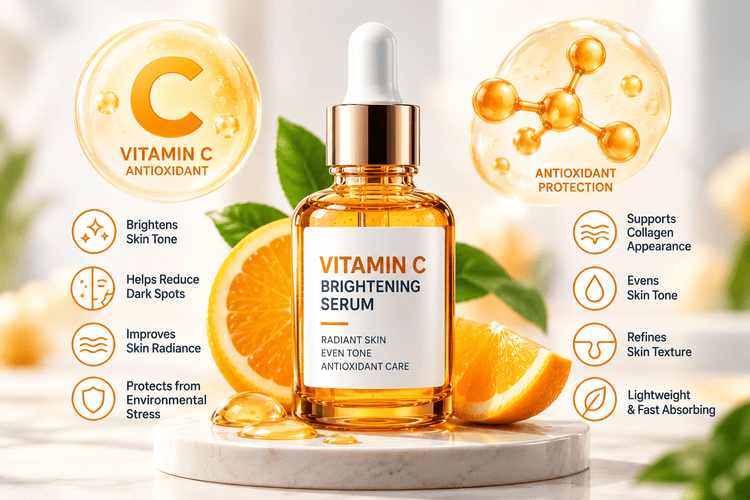
“Vitamin C Brightening Serum” is commonly associated with antioxidant skincare and improvements in skin radiance.
Tranexamic acid is more specifically associated with pigmentation-related skincare research.
| Feature | Tranexamic Acid Serum | Vitamin C Serum |
|---|---|---|
| Main ingredient | Tranexamic acid | Ascorbic acid or derivative |
| Common positioning | Dark spot appearance and uneven tone | Brightening and antioxidant skincare |
| Ingredient technology | Lysine-derived compound | Vitamin-based antioxidant |
| Primary development focus | Pigmentation-related cosmetic benefits | Antioxidant performance and stability |
| Evidence considerations | Depends on topical use and product design | Depends on vitamin C form and product design |
| Typical applications | Targeted facial serums | Serums, creams, antioxidant treatments |
Neither ingredient is universally superior.
The appropriate choice depends on the intended product concept, consumer needs, and supporting evidence.
Tranexamic Acid vs Niacinamide
Niacinamide is a multifunctional skincare ingredient commonly used in products targeting uneven skin tone, visible pores, and skin barrier support.
“Niacinamide 10% + Zinc Serum” is particularly associated with oily and combination skin care.
Tranexamic acid is more narrowly positioned around pigmentation-related cosmetic concerns.
The ingredients may be considered for complementary product concepts or combination products when technically appropriate.
However, combining ingredients does not automatically improve performance.
Finished-product safety, stability, and efficacy must be evaluated.
Tranexamic Acid vs Alpha Arbutin
Alpha arbutin is another cosmetic ingredient used in products targeting the appearance of uneven pigmentation.
Its proposed cosmetic activity is associated with processes involving melanin production.
Tranexamic acid has a different chemical structure and has been investigated through different biological mechanisms.
The selection of either ingredient requires consideration of regulatory restrictions, concentration limits, and target-market requirements.
For example, alpha arbutin is subject to specific concentration restrictions in EU cosmetic products.
Cosmetic brands should not assume that ingredients used for similar marketing purposes are interchangeable.
Can Tranexamic Acid Be Combined with Other Skincare Ingredients?
Tranexamic acid may be incorporated into multifunctional skincare concepts.
However, compatibility must be evaluated using the exact ingredients and finished formulation.
Tranexamic Acid and Niacinamide
These ingredients are frequently associated with products targeting uneven skin tone.
Niacinamide also contributes skin-conditioning benefits.
Tranexamic Acid and Vitamin C
Vitamin C derivatives may be considered in products targeting radiance and uneven pigmentation.
The compatibility of the selected vitamin C ingredient must be evaluated.
Tranexamic Acid and Hyaluronic Acid
Hyaluronic acid is commonly used to support skin hydration.
It can complement the moisturizing characteristics of targeted facial serums.
Tranexamic Acid and Panthenol
Panthenol is frequently used in products designed for skin comfort and hydration.
It may be useful in skincare concepts where tolerability is an important consideration.
Tranexamic Acid and Peptides
Peptides are used in various premium skincare products.
For additional product concepts, explore “Multi-Peptide Anti-Aging Serum” and “Copper Peptide Serum”.
Is Tranexamic Acid Serum Suitable for All Skin Types?
Suitability depends on the complete finished product.
Normal Skin
A tranexamic acid serum may be developed for normal skin with a focus on skin tone appearance and hydration.
Oily Skin
Lightweight serum textures may be attractive to consumers with oily skin.
Combination Skin
Combination skin products should balance hydration and comfortable absorption.
Dry Skin
A serum intended for dry skin may require additional moisturizing ingredients or complementary moisturizer use.
Sensitive Skin
Sensitive skin requires particular attention to tolerability.
Tranexamic acid products should not automatically be described as suitable for sensitive skin without appropriate testing.
Pigmentation-Prone Skin
Consumers experiencing persistent or changing pigmentation should consider professional dermatological advice.
A cosmetic serum should not replace medical evaluation when pigmentation may indicate an underlying condition.
How Long Does Tranexamic Acid Serum Take to Work?
The time required to observe visible improvements depends on the product, the type of pigmentation concern, and individual skin characteristics.
Some topical studies have evaluated tranexamic acid over periods of several weeks or months.
However, those findings cannot establish a universal timeline for all cosmetic products.
Brands should avoid promising specific results within a fixed number of days unless the claim is supported by finished-product testing.
Consistent sun protection is also important when managing pigmentation-related cosmetic concerns.
Does Tranexamic Acid Serum Replace Sunscreen?
No.
Tranexamic acid is not a sunscreen ingredient and does not provide a validated sun protection factor.
Ultraviolet exposure can contribute to the development and persistence of visible pigmentation irregularities.
Consumers seeking to improve the appearance of dark spots should use appropriate broad-spectrum sunscreen as part of their daily skincare routine.
A related product category is “SPF 50+ Lightweight Sunscreen”.
Why Tranexamic Acid Is Attractive for Cosmetic Brands
Tranexamic acid offers several opportunities for specialized skincare product development.
First, it is associated with a specific consumer concern: uneven pigmentation.
Second, it can support targeted product positioning within premium skincare collections.
Third, it may be incorporated into broader brightening skincare ranges alongside cleansers, moisturizers, and sunscreen products.
Fourth, its scientific background provides opportunities for educational product communication when claims are accurate and appropriately substantiated.
Brands may develop product concepts such as:
- Targeted dark spot serums.
- Daily brightening facial treatments.
- Multifunctional uneven-tone skincare.
- Premium skin radiance collections.
- Lightweight facial serums for different skin types.
Commercial differentiation should focus on product quality, tolerability, and verified performance.
Important Challenges in Tranexamic Acid Serum Development
Developing a high-quality tranexamic acid serum requires careful technical evaluation.
Ingredient Quality
Raw material identity, purity, and supplier documentation must be verified.
Concentration Selection
The appropriate concentration depends on the intended product, safety assessment, available evidence, and applicable regulatory requirements.
Product Stability
The finished product should maintain acceptable physical and chemical characteristics throughout its intended shelf life.
Ingredient Compatibility
Tranexamic acid may be combined with other cosmetic ingredients, but interactions must be evaluated.
Preservation
Water-based facial serums require appropriate microbiological quality control.
Skin Tolerability
Products targeting pigmentation concerns should avoid unnecessary irritation because irritation itself may worsen the appearance of pigmentation in susceptible individuals.
Packaging Compatibility
Packaging should be selected according to product stability, dispensing characteristics, and consumer expectations.
Claim Substantiation
Dark spot reduction and skin tone improvement claims should be supported by suitable evidence.
Packaging Trends for Dark Spot Serums
Tranexamic acid serums are commonly marketed in dropper bottles, pump dispensers, and airless packaging.
Premium skincare brands may prefer minimalist packaging that communicates scientific credibility and targeted performance.
However, packaging should not be selected solely for visual appeal.
Manufacturers should evaluate compatibility with the finished formulation, protection against contamination, and dispensing performance.
Packaging also influences consumer perceptions of quality and convenience.
Regulatory Considerations for Tranexamic Acid Cosmetics
Tranexamic acid has medical applications, but its inclusion in a skincare product does not automatically classify the finished product as a medicine.
Regulatory classification depends on factors including intended use, claims, ingredient status, and the requirements of the destination market.
In the European Union, cosmetic products must comply with Regulation (EC) No 1223/2009 and applicable safety, labeling, and notification requirements.
In the United States, cosmetic products are subject to relevant requirements under the Federal Food, Drug, and Cosmetic Act and MoCRA.
Claims such as improves the appearance of uneven skin tone may be appropriate cosmetic claims when supported by evidence.
Claims involving treatment of melasma or other medical pigmentation disorders may create additional regulatory requirements.
Ingredient permissibility and safe use conditions should be verified for the intended market before commercialization.
Custom Tranexamic Acid Dark Spot Serum Formulation Development
Developing an exclusive Tranexamic Acid Dark Spot Serum allows cosmetic brands to define their own product positioning and performance objectives.
A custom development project may focus on targeted brightening, hydration, skin comfort, or premium facial skincare.
The development process generally begins by establishing the intended consumer group, target market, product characteristics, and commercial requirements.
Technical evaluation may then address ingredient suitability, stability, safety, packaging compatibility, and required performance testing.
The objective is to create a product concept that is technically feasible and suitable for further validation before commercial manufacturing.
Custom Cosmetic Formulation Services with FormulationMarket
At FormulationMarket, we provide custom cosmetic formulation research and development services for beauty brands, entrepreneurs, and companies seeking exclusive skincare products.
Our services focus on developing technically structured cosmetic formulations according to the client’s intended market, product objectives, and manufacturing requirements.
For Tranexamic Acid Dark Spot Serum projects, we begin with an evaluation of the desired cosmetic benefits and ingredient feasibility.
Depending on the agreed project scope, a technical development package may include:
- Product definition and target specifications.
- Raw material selection and technical information.
- Laboratory formulation development.
- Manufacturing process documentation.
- Quality-control recommendations.
- Stability and compatibility guidance.
- Supporting technical documentation.
Exclusive formulation ownership and usage rights are established through the relevant contractual agreement.
FormulationMarket provides cosmetic formulation research and development services. We do not commercially manufacture cosmetic products.
Clients may arrange production through qualified cosmetic manufacturing partners after completing the necessary testing, safety assessment, and regulatory procedures.
Visit www.formulationmarket.com to learn more about our custom cosmetic formulation services.
Frequently Asked Questions About Tranexamic Acid Dark Spot Serum
What does Tranexamic Acid Dark Spot Serum do?
It is commonly developed to improve the appearance of dark spots, uneven skin tone, and visible pigmentation irregularities.
Can tranexamic acid serum remove dark spots permanently?
No cosmetic serum can guarantee permanent removal of dark spots. Results depend on the underlying cause of pigmentation, product performance, and environmental factors.
Is tranexamic acid better than vitamin C?
Neither ingredient is universally better. They have different chemical properties and skincare applications.
Can tranexamic acid be used with niacinamide?
Yes, the ingredients may be used together in appropriately designed skincare products, subject to compatibility and safety evaluation.
Is tranexamic acid suitable for sensitive skin?
Suitability depends on the complete formulation and individual tolerance. Sensitive-skin claims require appropriate support.
Can tranexamic acid treat melasma?
Tranexamic acid has been investigated in medical research involving melasma. However, a cosmetic serum should not be marketed as a treatment for melasma without appropriate regulatory authorization.
Should tranexamic acid serum be used with sunscreen?
Yes. Appropriate sun protection is important for individuals concerned about uneven pigmentation.
Can cosmetic brands develop exclusive tranexamic acid serums?
Yes. Custom formulation development can support the creation of specialized skincare products according to defined technical and commercial requirements.
Conclusion
Tranexamic Acid Dark Spot Serum represents an important product concept within targeted brightening skincare.
Its scientific background and association with pigmentation-related research have contributed to interest among cosmetic brands and consumers.
However, successful product development requires careful attention to ingredient quality, concentration, stability, skin tolerability, and regulatory compliance.
For cosmetic brands, custom tranexamic acid serum formulation development provides an opportunity to create differentiated products targeting the appearance of uneven skin tone and dark spots.
Through professional formulation research and development, businesses can explore this ingredient technology while maintaining a focus on safety, substantiated claims, and consistent product quality.