Blog
Exosome-Inspired Skin Serum: Benefits, Ingredients, Skincare Technology and Cosmetic Formulation Development

Exosome-Inspired Skin Serum is one of the most discussed concepts in biotechnology-inspired skincare. As the cosmetics industry explores advanced skin-conditioning technologies, extracellular vesicles, peptides, botanical extracts, and innovative ingredient delivery systems, exosome-related skincare has attracted growing interest among beauty brands and cosmetic product developers.
Originally studied in biological and medical research, exosomes are microscopic extracellular vesicles involved in communication between cells. Their complex composition and biological functions have encouraged research into their potential applications in dermatology and skin science.
In the cosmetic industry, however, the term exosome-inspired can describe several different approaches. Some products incorporate ingredients marketed as extracellular vesicle preparations, while others use botanical extracts, peptides, or other skin-conditioning technologies inspired by research into cellular communication.
These distinctions are important because not every exosome-inspired cosmetic contains actual exosomes, and results from laboratory or medical studies cannot automatically establish the effectiveness of a topical skincare product.
This article explores what exosome-inspired skin serums are, how the underlying technology works, potential cosmetic benefits, ingredient categories, safety considerations, regulatory challenges, and opportunities for custom cosmetic formulation development.
What Is an Exosome-Inspired Skin Serum?
An Exosome-Inspired Skin Serum is a skincare product developed around the concept of advanced cellular communication and skin-conditioning technologies.
Exosomes are a subtype of extracellular vesicles released by cells. They are surrounded by a lipid membrane and may carry proteins, lipids, nucleic acids, and other biological components.
In living organisms, extracellular vesicles participate in complex biological processes. Researchers have investigated their possible applications in tissue biology, inflammation, and regenerative medicine.
The cosmetic interpretation of this technology is considerably broader.
Exosome-inspired skincare products may contain:
- Plant-derived extracellular vesicle preparations.
- Fermentation-derived cosmetic ingredients.
- Peptides and amino acid complexes.
- Botanical extracts selected for skin-conditioning properties.
- Liposome-based or other encapsulated ingredient systems.
- Conventional moisturizing and barrier-supporting ingredients.
These ingredient categories are not scientifically interchangeable. In particular, liposomes are engineered delivery structures and should not be described as biological exosomes.
For cosmetic brands, the term exosome-inspired should therefore be supported by an accurate explanation of the actual ingredient technology used.
Understanding Exosome Technology in Skincare
What Are Exosomes?
Exosomes are nanoscale extracellular vesicles formed through specific cellular pathways.
They are generally described as having dimensions of approximately 30–150 nanometers, although size alone cannot reliably distinguish exosomes from other extracellular vesicles.
Extracellular vesicles are studied because they can transport biological materials between cells under certain conditions.
Their composition depends on factors such as the originating cell type, production conditions, isolation method, and processing technology.
In cosmetic ingredient development, these characteristics introduce important challenges related to identity, purity, consistency, and stability.
How Do Exosome-Inspired Cosmetics Work?
The mechanism depends entirely on the ingredients present in the finished cosmetic product.
For products containing conventional humectants, peptides, and botanical extracts, benefits may arise through established cosmetic mechanisms such as hydration, skin conditioning, and improvements in the appearance of dryness.
For products containing extracellular vesicle preparations, the situation is more complex.
Although extracellular vesicles have demonstrated biological activity in various experimental settings, their behavior after application to intact human skin is not fully established.
The skin barrier may limit the penetration of certain vesicle preparations, and ingredient processing can affect their structural integrity.
Therefore, claims that a topical serum delivers cellular messages, regenerates skin tissue, or activates cellular repair pathways require strong product-specific scientific evidence.
Potential Benefits of Exosome-Inspired Skin Serum
Exosome-inspired serums are frequently positioned within premium skincare categories focusing on hydration, skin comfort, and the visible signs of aging.
The benefits of a particular product depend on its actual ingredients and supporting performance data.
1. Improved Skin Hydration
Hydration is a fundamental objective of many advanced facial serums.
An exosome-inspired serum may incorporate moisturizing ingredients that help increase skin hydration and improve surface smoothness.
A well-designed hydrating serum can reduce the appearance of dryness and contribute to a more comfortable skin feel.
These effects should be attributed to ingredients and mechanisms supported by appropriate evidence.
2. Skin Barrier Support
The skin barrier plays an important role in limiting water loss and protecting the skin from environmental exposure.
Cosmetic products developed around barrier support may incorporate humectants, emollients, and skin-conditioning ingredients.
Exosome-inspired formulations can be positioned within this category when finished-product testing supports the intended benefits.
3. Improved Appearance of Fine Lines
Fine lines can appear more noticeable when skin is dehydrated.
Moisturizing serums may temporarily improve their appearance by increasing hydration and supporting a smoother skin surface.
More specific anti-aging claims require suitable clinical or instrumental evidence.
4. Skin Comfort and Conditioning
Advanced skincare products are often designed for consumers seeking gentle, comfortable daily skincare.
A suitable formulation may help improve skin feel and reduce the appearance of dryness-related discomfort.
However, claims relating to treatment of inflammation, wound healing, or skin disease fall outside ordinary cosmetic positioning in many markets.
5. Premium Skincare Experience
Consumer acceptance is influenced by more than ingredient selection.
Texture, spreadability, absorption, packaging, fragrance profile, and overall product appearance all contribute to perceived quality.
For premium skincare brands, these sensory characteristics are important elements of product differentiation.
Plant-Derived Exosomes and Botanical Extracellular Vesicles
Plant-derived extracellular vesicles are an area of growing research interest.
Scientists have investigated vesicle-like structures isolated from various plant materials, including fruits and other botanical sources.
In cosmetics, plant-derived technologies can appeal to brands interested in botanical innovation and biotechnology-inspired product concepts.
However, the terminology requires precision.
Not every plant extract contains intact extracellular vesicles, and not every ingredient marketed as plant exosomes has been characterized using appropriate analytical methods.
Important considerations include:
- Botanical source identification and traceability.
- Extraction and purification methods.
- Evidence of vesicle identity and composition.
- Microbiological quality.
- Stability during storage and formulation processing.
- Batch-to-batch consistency.
- Cosmetic safety and regulatory suitability.
A plant-derived source does not automatically establish that an ingredient is safe, vegan-certified, sustainable, or effective.
Brands should obtain appropriate supplier documentation before making such claims.
Exosome-Inspired Skin Serum vs PDRN Repair Serum
Exosome-inspired skincare and PDRN-based skincare are frequently discussed together because both are associated with biotechnology-inspired cosmetic innovation.
However, they are based on different scientific concepts.
“PDRN Repair Serum” focuses on polydeoxyribonucleotide ingredients, which consist of DNA fragments.
Exosome-inspired skincare, by contrast, may involve extracellular vesicle preparations or other technologies selected to reflect aspects of extracellular vesicle research.
| Feature | Exosome-Inspired Skin Serum | PDRN Repair Serum |
|---|---|---|
| Primary concept | Extracellular vesicle-inspired skincare | Polydeoxyribonucleotide-based skincare |
| Ingredient technology | Varies by product | DNA-fragment-derived ingredients |
| Typical positioning | Advanced skin conditioning | Premium skin-conditioning and repair-inspired care |
| Main technical concern | Ingredient identity and characterization | Source, molecular properties and compatibility |
| Topical cosmetic evidence | Limited and technology-specific | Limited and formulation-specific |
| Regulatory considerations | Highly dependent on ingredient origin and claims | Dependent on ingredient origin and claims |
Neither ingredient concept should be assumed to provide medical skin regeneration benefits when used in an ordinary cosmetic serum.
For brands exploring advanced skincare collections, these categories may represent separate product concepts rather than interchangeable technologies.
Common Ingredients Used in Exosome-Inspired Skincare
An exosome-inspired serum may combine advanced ingredient positioning with established cosmetic materials.
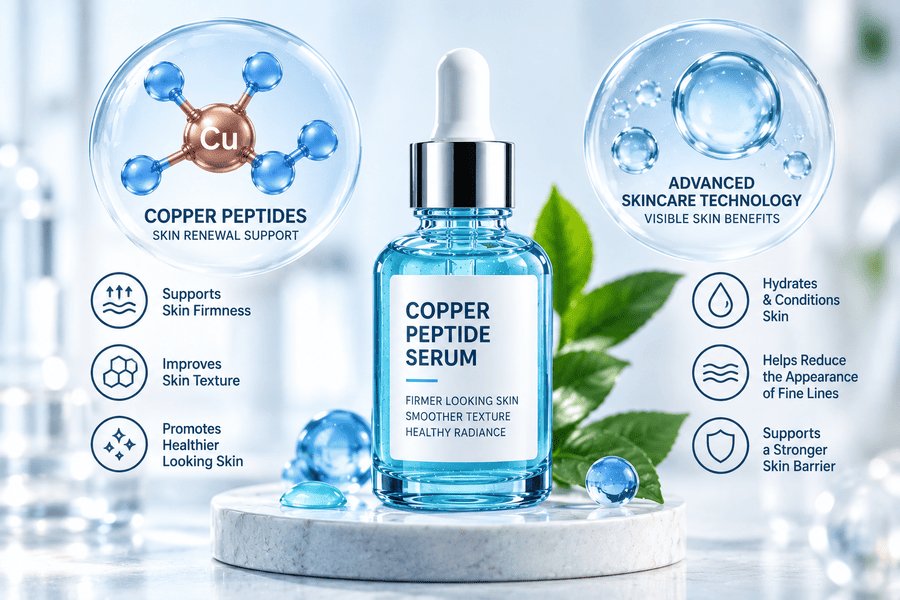
Peptides
Peptides are widely used in premium skincare products targeting the appearance of fine lines and skin firmness.
Different cosmetic peptides have different properties, and their effectiveness depends on their identity and the finished formulation.
Brands interested in peptide technology can explore “Multi-Peptide Anti-Aging Serum” and “Copper Peptide Serum”.
Hyaluronic Acid
Hyaluronic acid is an established moisturizing ingredient used in facial serums, creams, and other skincare products.
It contributes to hydration and can improve the feel of dehydrated skin.
Niacinamide
Niacinamide is a multifunctional skincare ingredient associated with barrier support, skin conditioning, and improvements in the appearance of uneven skin tone.
For a dedicated product concept, explore “Niacinamide 10% + Zinc Serum”.
Panthenol
Panthenol is commonly incorporated into moisturizing and skin-conditioning products.
It is particularly relevant to skincare concepts emphasizing hydration and comfort.
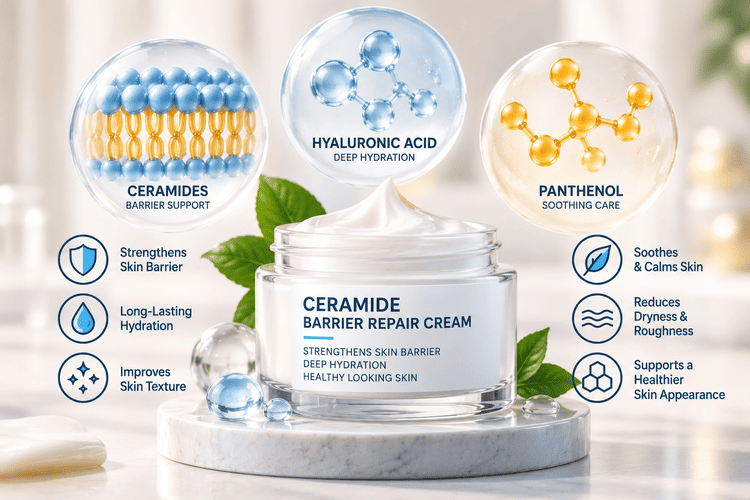
Ceramides
Ceramides are lipid ingredients associated with the skin’s natural barrier structure.
They are frequently used in moisturizers and barrier-supporting skincare.
A related product category is “Ceramide Barrier Repair Cream”.
Botanical Extracts
Botanical extracts may contribute antioxidant, conditioning, or sensory properties depending on their composition and supporting evidence.
Their use requires appropriate quality control, stability assessment, and safety evaluation.
Are Exosome-Inspired Serums Suitable for Sensitive Skin?
Suitability depends on the finished product rather than the marketing concept.
A serum described as exosome-inspired may contain many different ingredients, including preservatives, fragrances, botanical extracts, and other materials that affect skin tolerability.
For sensitive skin, developers should consider minimizing unnecessary irritation risks and evaluating the finished formulation through appropriate safety and tolerability assessments.
Consumers with known allergies should review the ingredient list and relevant product information.
Products should not be marketed as hypoallergenic or universally suitable for sensitive skin without appropriate substantiation.
Exosome-Inspired Skincare and Korean Beauty Innovation
Korean skincare has contributed to international awareness of biotechnology-inspired cosmetic concepts.
K-beauty brands frequently emphasize ingredient innovation, lightweight textures, multi-step skincare routines, and distinctive product positioning.
Exosome-related products fit into this broader interest in advanced skincare technologies.
For international beauty brands, Korean skincare trends may provide inspiration for product concepts such as lightweight facial serums, hydrating ampoules, and premium skin-conditioning treatments.
However, a trend’s popularity does not establish its scientific effectiveness or regulatory suitability.
Brands entering this category should prioritize ingredient transparency, safety, and substantiated cosmetic benefits over exaggerated biological claims.
Exosome-Inspired Serum vs Conventional Anti-Aging Serum
Conventional anti-aging serums commonly use established cosmetic ingredients such as retinoids, vitamin C derivatives, peptides, niacinamide, and moisturizing agents.
Exosome-inspired serums are often differentiated through biotechnology-related positioning.
The distinction does not necessarily mean that exosome-inspired products perform better.
A well-developed conventional serum may have stronger evidence for particular cosmetic benefits than an innovative product based on a poorly characterized ingredient.
Consumers and cosmetic brands should evaluate products according to their actual composition, quality, and supporting test results.
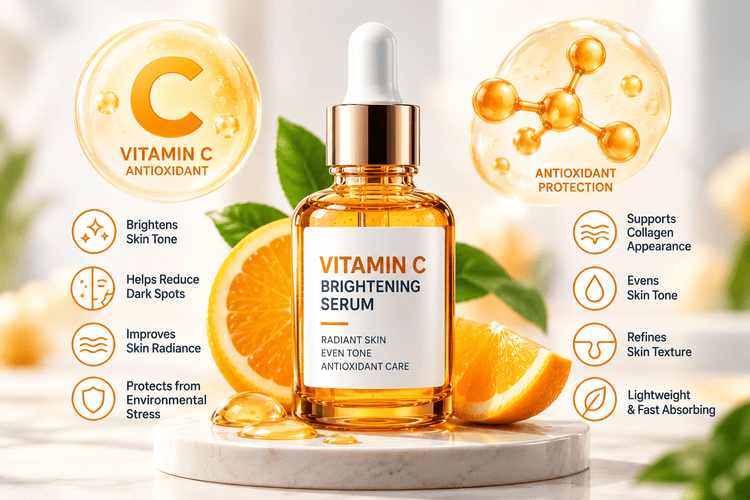
Related skincare concepts include “Vitamin C Brightening Serum”, “Bakuchiol Night Cream”, and “Peptide Firming Face Cream”.
Key Challenges in Exosome-Inspired Cosmetic Product Development
Developing an exosome-inspired serum involves several scientific and commercial considerations.
Ingredient Identity and Quality
Manufacturers must establish exactly what the raw material contains.
A supplier description referring to exosomes or extracellular vesicles should be supported by appropriate characterization data.
Stability and Product Integrity
Biologically derived materials can present stability challenges.
Processing conditions, storage temperatures, preservatives, and interactions with other ingredients may influence the properties of the final product.
Preservation and Microbiological Safety
Water-based facial serums generally require an appropriate microbiological control strategy.
Preservative efficacy testing and microbiological quality assessment may be necessary depending on the formulation and packaging.
Packaging Compatibility
Packaging materials can influence product stability, contamination risk, and consumer experience.
Airless dispensers, pumps, and dropper bottles have different technical characteristics and should be selected according to the formulation’s requirements.
Claim Substantiation
Marketing claims must accurately reflect the product’s demonstrated cosmetic effects.
Statements involving cellular regeneration, tissue healing, or treatment of medical conditions require particular scrutiny.
Commercial Feasibility
Raw material costs, ingredient availability, manufacturing complexity, and regulatory requirements all affect commercial feasibility.
A technically attractive ingredient may not be suitable for every market or product concept.
Regulatory Considerations for Exosome-Inspired Cosmetics
Regulatory review is particularly important for products associated with human-derived, animal-derived, or biologically active materials.
In the European Union, cosmetic products must comply with Regulation (EC) No 1223/2009, including applicable ingredient restrictions and safety requirements.
Human-derived cells, tissues, and products of human origin are prohibited in EU cosmetics under Annex II, entry 416. Therefore, human-cell-derived exosome ingredients present significant regulatory barriers.
In the United States, the FDA has warned that exosome products promoted for treating diseases or medical conditions may be regulated as biological products or drugs and require appropriate authorization. No FDA-approved exosome products have been established for such therapeutic uses.
A cosmetic serum does not become a legally acceptable cosmetic merely because its label uses the word serum or skincare.
Manufacturers must evaluate:
- Ingredient source and legal status.
- Intended use and product classification.
- Safety assessment requirements.
- Product notification or registration obligations.
- Labeling requirements.
- Advertising and efficacy claims.
For EU and US markets, regulatory suitability should be confirmed before committing to commercial product development.
How to Develop a Custom Exosome-Inspired Skin Serum
For beauty brands, an exosome-inspired serum can be approached as a custom skincare development project focused on defined cosmetic performance objectives.
The first step is to identify whether the product will contain a verified extracellular vesicle ingredient or use a broader biotechnology-inspired positioning based on conventional cosmetic ingredients.
This distinction affects raw material selection, product documentation, safety evaluation, and marketing.
A professional development project typically involves defining the target market, intended skin benefits, sensory requirements, packaging preferences, and commercial cost objectives.
The formulation development team can then evaluate technically and legally suitable ingredient options.
Relevant product development activities include ingredient screening, laboratory evaluation, stability assessment, microbiological testing, packaging compatibility studies, and manufacturing process documentation.
Additional regulatory and safety evaluations may be required before commercial launch.
Custom Cosmetic Formulation Development with FormulationMarket
At FormulationMarket, we support cosmetic brands and entrepreneurs seeking customized skincare and personal care formulation development.
Our services focus on developing technically structured cosmetic formulations according to the client’s intended market, product concept, performance requirements, and manufacturing conditions.
For exosome-inspired skincare projects, an initial feasibility assessment is especially important because the availability and regulatory suitability of specific ingredients can vary considerably.
Depending on the agreed scope, a custom cosmetic formulation project may include:
- Product definition and target specifications.
- Raw material evaluation and selection.
- Laboratory formulation development.
- Ingredient compatibility and stability guidance.
- Manufacturing process instructions.
- Quality-control specifications.
- Technical documentation and recommendations for required testing.
FormulationMarket provides cosmetic formulation research and development services rather than commercial cosmetic manufacturing.
Brands can use the resulting technical documentation to support discussions with qualified cosmetic manufacturing partners, subject to successful validation and applicable regulatory requirements.
Visit FormulationMarket.com to learn more about custom cosmetic formulation development and exclusive skincare product concepts.
Frequently Asked Questions About Exosome-Inspired Skin Serum
What is an Exosome-Inspired Skin Serum?
It is a skincare product developed around extracellular vesicle-related concepts or other biotechnology-inspired cosmetic technologies. Its actual ingredients vary by product.
Do all exosome-inspired serums contain real exosomes?
No. Some products use the term to describe their positioning rather than the presence of verified extracellular vesicles.
Are exosome serums proven to regenerate skin?
There is insufficient evidence to conclude that ordinary topical cosmetic exosome serums regenerate human skin tissue. Such claims require rigorous, product-specific evidence and may raise regulatory concerns.
Are plant-derived exosomes the same as human exosomes?
No. Plant-derived extracellular vesicles and human-cell-derived exosomes differ in origin, composition, and biological context.
Can exosome-inspired serums be vegan?
Some products based entirely on suitable non-animal ingredients may qualify, but this must be verified through ingredient sourcing and appropriate documentation.
Is Exosome-Inspired Skin Serum better than PDRN Repair Serum?
There is no reliable basis for a general superiority claim. The two categories involve different technologies, and performance depends on the actual product and supporting evidence.
Can a cosmetic brand develop an exclusive exosome-inspired serum?
Yes, subject to technical feasibility, ingredient availability, safety, and regulatory suitability. A custom formulation project can be developed around a clearly defined cosmetic product concept.
Conclusion
Exosome-Inspired Skin Serum represents an emerging category within biotechnology-inspired skincare.
The concept reflects growing interest in advanced ingredients, scientific skincare positioning, and premium facial serum development.
However, extracellular vesicle research is complex, and the scientific evidence for medical applications should not be confused with demonstrated benefits from ordinary topical cosmetic products.
For cosmetic brands, the strongest approach is to focus on transparent ingredient selection, realistic cosmetic claims, appropriate safety evaluation, and reliable finished-product performance.
Through professional custom cosmetic formulation development, businesses can explore innovative skincare concepts while maintaining the technical and regulatory discipline necessary for successful commercialization.